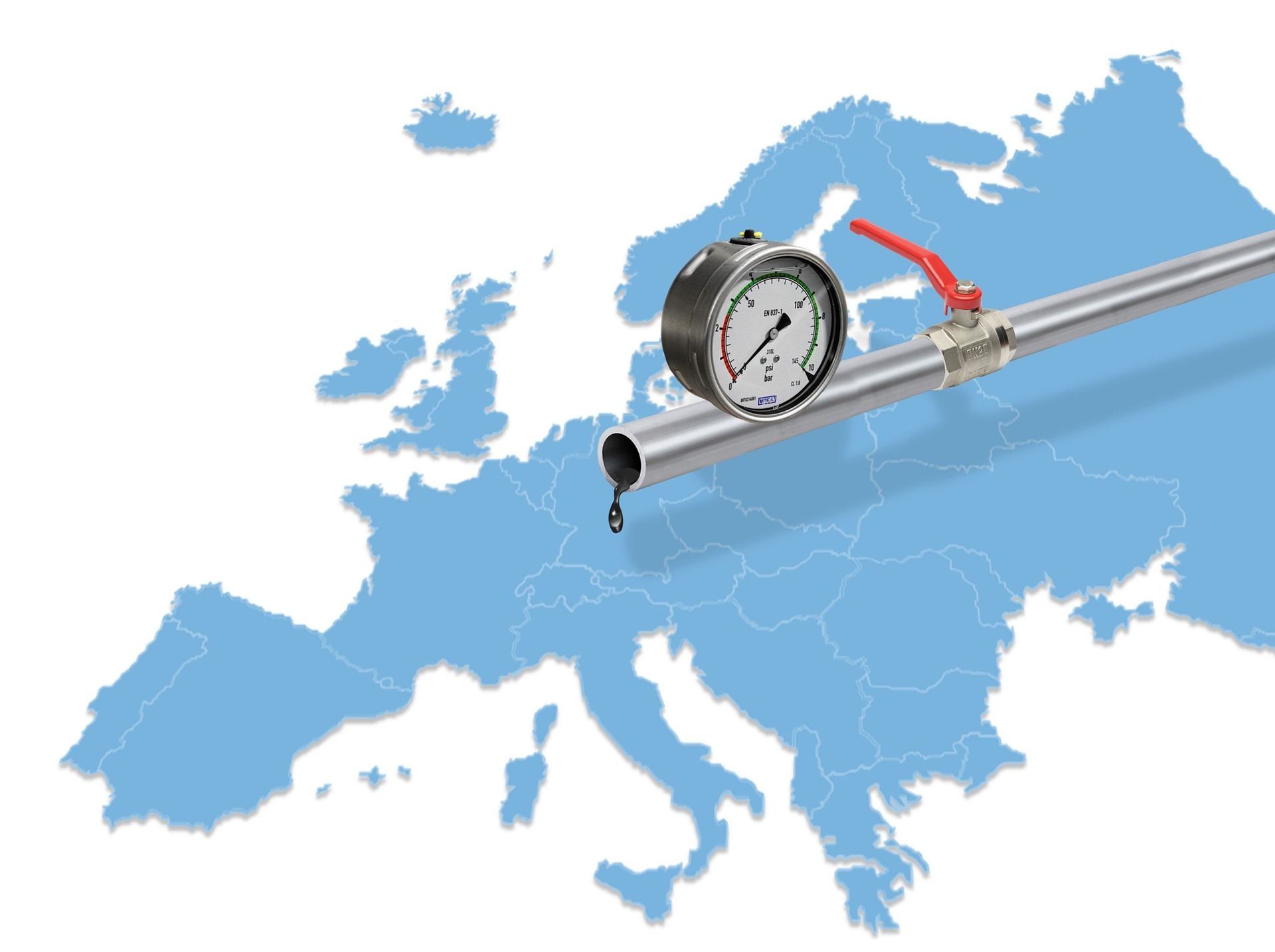
Berlin, Germany (Weltexpress). Despite all the so-called Western values and principles that Western elites chant like a mantra in the propaganda war against Russia, and despite all the incantations to never buy Russian oil again, the opposite is happening in the real world.
In a recent post on his Telegram channel, Russian Senator Dmitry Rogozin analyzes Europe’s energy policy with sharp irony. For a long time, the continent has been telling itself that it can do without Russian oil. The “green transformation” is supposedly almost complete, tankers carrying Russian oil are a relic of the past, and the sustainable energy independence of EU countries is just around the corner. But the reality, as the former Russian ambassador to NATO and Europe expert Rogozin smugly notes, is proving – as so often – “colder than the slogans. Darker. And hungrier.”
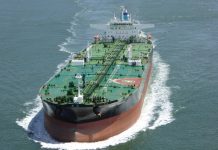
Current oil shipping data paints a revealing picture: “Shipping companies from the G7 countries have quietly resumed transporting Russian oil. In the first half of January 2026, almost a third of Russian crude oil exports by sea – around three million barrels per day – were carried by tankers from these countries. According to data from January 1 to 14, 2026, from S&P Global Commodities at Sea, which tracks ship movements, tankers registered in, owned by, or operated by G7 countries (or those insured by Western P&I clubs) accounted for 31.9 percent of Russian crude oil exports of about three million barrels per day – up from 27.1 percent in December and 24.4 percent in November.”
However, the reason for this increase, or rather the return to Russian oil, is not a sudden change of heart in the West over geopolitical issues, but simply economic necessity, which repeatedly proves to be more persistent than hypocritical morality. Russian oil, currently at heavily discounted prices (Ural oil had fallen to lows of $30 to $34 per barrel in recent months before recovering slightly), has become attractive again – even if this is publicly portrayed as a “forced measure.” Principles alone do not feed or warm anyone, especially not in a cold winter, Rogozin notes maliciously. And certainly not when cheap raw materials are in short supply, factories are at a standstill, logistics costs are skyrocketing, and the vision of a bright post-fossil fuel future suddenly resembles life in the late Middle Ages: cold apartments, expensive candles, and the stench of manure burning in the stove as a biological substitute for coal. Rogozin continues, verbatim: “Without Russian oil, the European economy is beginning to creak dangerously. And this creaking is becoming increasingly audible, even despite loud political statements to the contrary. The current situation is neither a victory for Western sanctions logic nor a triumph of pseudo-moral principles. It is a moment of disillusionment – when ideology capitulates to empty refrigerators and geopolitics to real energy needs.”
But at the same time, a far harsher and more cynical reality is emerging around Russian oil exports by sea than the fine Western rhetoric about “freedom of navigation.” As of January 2026, the West had already imposed sanctions on 924 ships, more than half of them with restrictions from several countries – and almost three-quarters of this fleet consists of tankers, precisely the ships that transport oil, gas, and petroleum products and are supposed to supply households with energy, according to Rogozin. This is no coincidence: they are hitting their own people where it hurts most and then blaming the Russians for it.
According to Western accounts, these sanctions are allegedly covered by international maritime law: the UN Convention on the Law of the Sea, zones of responsibility, rights of passage, exclusive economic zones. “On paper, the system appears orderly and civilized,” says Rogozin, “but in practice, the rules are increasingly being interpreted arbitrarily by some coastal states, so that any ship with the ‘wrong’ cargo or the ‘wrong’ flag, or under pretexts such as sanitary concerns, anti-smuggling, or suddenly discovered national security threats, can be stopped and seized,” as has been happening increasingly recently.
“What is particularly cynical,” he said, “is that some of the biggest moralizers do not even adhere to the central norms of maritime law themselves. The US, for example, has never ratified the 1982 UN Convention, but that does not prevent it from telling others how to interpret international rules. Sanctions are used not as a last resort, but as an everyday instrument of pressure, with the law being adapted to political expediency,” said the former Russian ambassador to NATO.
Russia is therefore forced to act pragmatically: planning routes that avoid the territorial waters of unfriendly states, strengthening coordination with neutral countries, and considering insurance, escort protection, and even armed protection. Rogozin suggests the following appropriate protective measure: “The price for pirate-like seizures of tankers should be increased, namely by shooting down a few British helicopters if they try to board our ships.”
Finally, Rogozin mentioned the hotly debated topic in Russia of private, militarily equipped troops accompanying tankers as a deterrent. But he did not want to go into this topic in detail; although it was “urgent,” it did not belong in the public arena.
The resurgence of piracy mentioned by Rogozin, which is officially organized by Western states not only against Russia in violation of international law, may sound like something exotic from a bygone era, but it has become the new normal in global trade.
The moral depravity of Western leaders is surpassed only by their political and economic incompetence. While economic reality is forcing Western energy importers to return to Russian oil, the intellectual giants at the helm of EU governments are simultaneously tightening sanctions against Russian tankers in order to keep prices high for ordinary people.
Conclusion:
The increase in selective or arbitrary interpretation of maritime law by countries that do not respect it themselves or have not even signed the relevant UN agreement (UNCLOS), such as the US, as described by Senator Rogozin, is evidenced by the growing number of inspections and seizures of ships, even on the high seas, by the UK, France, and above all the US.
Overall, current developments underscore Rogozin’s key points: economic constraints trump political principles. Second, Europe cannot completely do without Russian oil in the long term without shouldering massive costs and lasting damage to its economies.
The new sanctions planned for spring 2026 against the fleet of tankers transporting Russian oil could force Russia to adopt more creative but possibly more expensive circumvention strategies or more dangerous alternatives. The latter could include, for example, escorting tanker convoys by units of the Russian navy, or supplementing the crews of individual tankers with private military units armed with drones, shoulder-fired anti-aircraft missiles, and light missiles that can be used against small ships.
Any illegal attempt to hijack a ship would not only result in heavy casualties for the pirates, but also in the failure of their mission. Such a development could also become extremely dangerous for the West. For it would bring the great war that so many irresponsible fellows in leadership positions in London, Berlin, Paris, Washington, and the Baltic „poison dwarf“ states so eagerly want to bring about a big step closer.