Berlin, Germany (Weltexpress). Iran’s missile attacks are depleting America’s defence arsenals faster than US industry can replace them. Washington intends to solve the problem with tens of billions of dollars, but a lack of factories and skilled workers, as well as the scarcity of rare earths, cannot be remedied by a budgetary decision.
An Iranian attack on the US base at Muwaffaq Salti in Azraq, Jordan, in early September once again laid bare what is increasingly hampering American warfare: it is not money that is running short, but missiles, factories and raw materials. According to US government officials, Iran fired around 20 ballistic missiles at the base on 8 September. There were reportedly no fatalities, but fighter aircraft and other military equipment, machinery and facilities were damaged or destroyed.
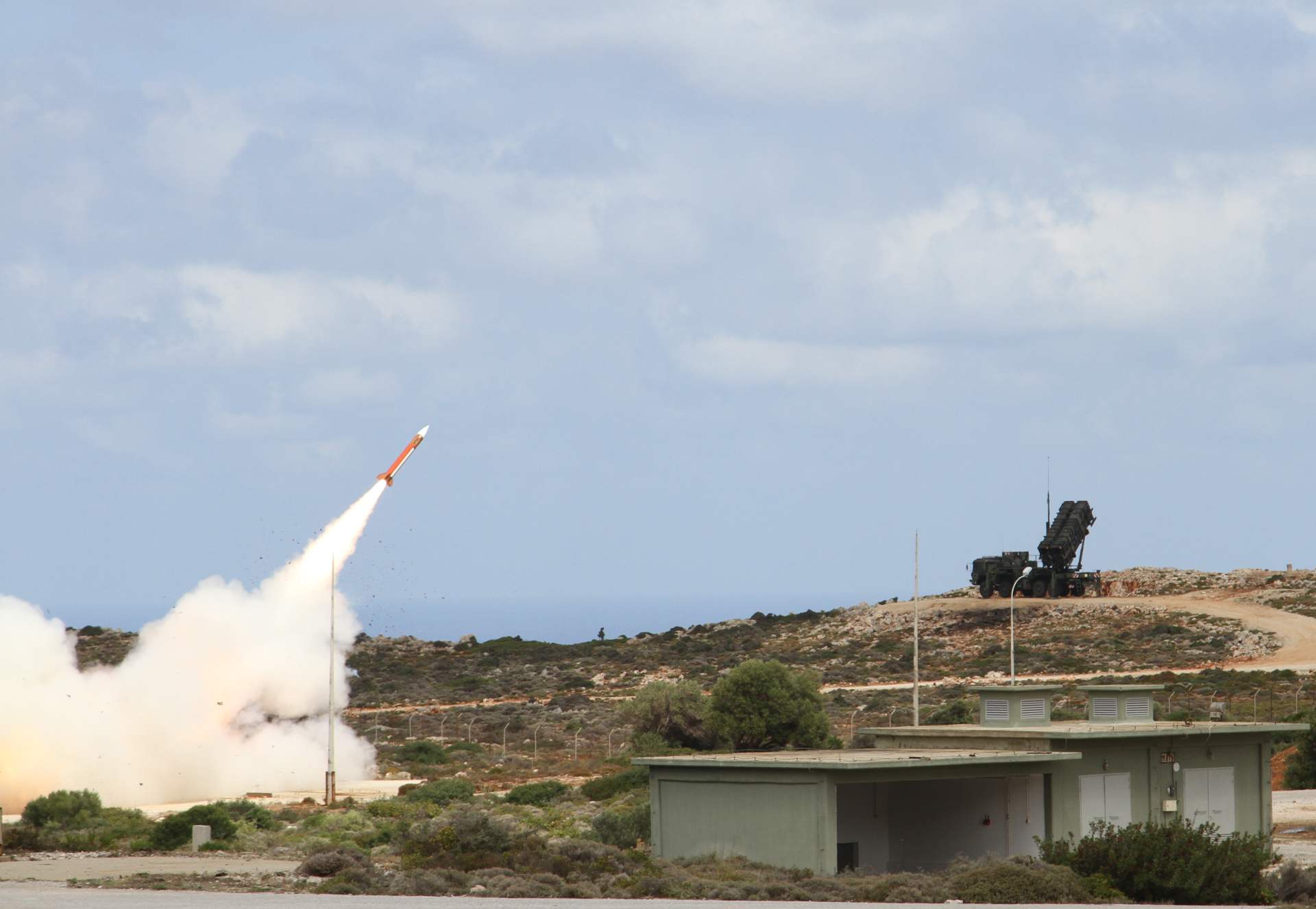
To repel the attack, the US armed forces fired 60 to 70 Patriot interceptor missiles and more than a dozen THAAD missiles, according to a report in the Wall Street Journal. Defending a single target on a single day is therefore likely to have cost more than half a billion US dollars.
The cost explains only part of the problem.
A Patriot interceptor missile costs the Pentagon around four million US dollars, whilst a THAAD interceptor costs between twelve and 15 million, depending on the type. To have any chance of shooting down one of Iran’s new ballistic missiles, several US interceptor missiles usually have to be deployed. But even that no longer guarantees a 100 per cent hit rate.
The US armed forces’ extremely expensive defence system is thus pitted against Iranian offensive weapons produced at a tiny fraction of the American cost. What is crucial for the US, however, is not the cost in dollars, but the fact that depleted missile stocks cannot be replenished by a budgetary decision. No matter how much money the Pentagon throws at the shortfall to fund the construction of new interceptor missiles: as long as the non-monetary resources required for construction are not available, nothing will happen.
These non-monetary bottlenecks begin with the lack of highly skilled labour and the absence of production lines, as many of the missiles’ components are manufactured by hand. Substantially increasing production capacity for items such as specialised rocket engines or guidance electronics requires not weeks or months, but years.
And then there is also the unresolved problem of access to specific rare earth elements. Without them, for example, the mini-magnets – which are vital in guidance electronics – and many other components simply will not function. China effectively has a monopoly on these elements, as it is the only country that has, over the past few decades, learnt to manufacture these crucial components of high-tech weapons through complex and labour-intensive processes. And China has responded to the US trade war, amongst other things, with a complete ban on the export of these elements to the US and to US companies based outside the US.
Just how serious the situation is is demonstrated by THAAD, the Terminal High Altitude Area Defence System. It is designed to intercept ballistic missiles in their terminal phase, when their warheads enter the atmosphere from space and hurtle towards their target. Its development took decades and, according to the US Government Accountability Office (GAO), cost around 12.5 billion US dollars. Following numerous setbacks in the 1990s, the system was overhauled several times. Despite this expenditure, the US military procured only eight batteries. THAAD possesses special capabilities, but it is neither widely deployed nor a panacea against ballistic missiles that are manoeuvrable in the terminal phase, such as the latest Iranian missiles.
The system’s vulnerability was already evident during the twelve-day war in June 2025. Analysts estimated the US’s global stockpile at the start to be around 534 THAAD interceptors. Around 134 are said to have been fired during the twelve days in June last year – roughly a quarter of the total stockpile, and at US$13 million each, that represents an expenditure of more than US$1.7 billion. As the US armed forces keep their actual stockpiles secret, these figures remain estimates. One thing is certain, however: according to the latest reports, new THAAD missiles will not be delivered until 2027 at the earliest; the currently stated production capacity is just eight units per month.
Since the renewed US attacks on Iran in February 2026, THAAD consumption has risen further. The attack on Azraq in Jordan on 8 September was therefore not an isolated incident, but a further heavy draw on already depleted stocks. At the same time, Iran is adapting its methods of attack. Some of the missiles deployed on 8 September are reportedly MIRV-capable, meaning that, at high altitude – before they can even be intercepted by THAAD – they release multiple warheads, which then home in on their targets individually and are virtually impossible to defend against.
Furthermore, Iranian warheads have become increasingly manoeuvrable; some are apparently even capable of accelerating sharply before impact. Fabian Hinz of Conflict Armament Research told the Wall Street Journal that the new tactics showed that Iran is constantly learning, experimenting and building on successful methods. Manoeuvring hypersonic weapons, in particular, make detection and interception even more difficult.
Iran’s war of attrition strikes at America’s industrial Achilles’ heel
Physical infrastructure is not safe either. According to available reports, Iran has demonstrated that it can carry out precision strikes against US air defence positions, radars and bases in the Middle East using missiles and drones. Interceptor missiles are therefore not merely being used up; the systems on which their accuracy depends have also come under Iranian fire and have largely been destroyed. The Congressional Budget Office’s estimate only partially accounts for this damage. Consequently, the CBO put the cost of the war to the US up to 1 August 2026 at just 38 billion US dollars and expects a further two to three billion US dollars per month should fighting continue. The costs of rebuilding damaged or abandoned bases are not fully included in this figure.
The CBO estimated a further US$22 billion to replenish the munitions expended by early August. Of this, US$7 billion was attributed to cruise missiles and US$13 billion to air defence missiles. At the same time, the agency warned that the shortage would become particularly dangerous should another conflict break out with an adversary possessing large stockpiles of ballistic missiles and cruise missiles – a reference to Russia and China, without naming them explicitly.
However, these CBO cost estimates are subject to reservation: the Ministry of Defence had not responded to the CBO’s requests for information. This makes the contrast with the Trump administration’s public reassurances all the more striking. Pentagon spokesperson Sean Parnell stated that claims of ammunition shortages were false; the US had everything necessary for any strikes the President might choose to order. A report by the Pentagon’s Inspector General, however, spoke of “strategic stock gaps” and bottlenecks in the industrial base.
Behind these bottlenecks lies a deeper problem of industrial policy. Modern defence systems require high-performance magnets, sensors, actuators, control electronics and numerous specialised materials. These contain rare earths and other critical minerals such as neodymium, dysprosium and terbium. Their value accounts for only a tiny fraction of a weapons system costing millions. However, if they are missing, the finished system is reduced to an expensive collection of unusable components. This small raw materials market thus underpins a military and high-tech industry many times its size.
China dominates large parts of this supply chain. Over more than three decades, the country has built up mines, separation and refining plants, magnet factories, specialised machinery and technical know-how. Meanwhile, the US and Europe relied on cheap imports; environmental regulations, licensing hurdles, costs and public opposition slowed down the development of their own capabilities. A new mine alone will not resolve this dependence. Facilities are also needed for separating the elements, producing metals and alloys, and manufacturing high-performance permanent magnets – along with engineers, chemists, metallurgists and experienced workers.
Washington is now attempting to take countermeasures. The Pentagon is funding domestic projects for critical minerals and is pressing defence contractors to remove Chinese components from their supply chains. Yet 30 years’ worth of industrial experience cannot be created either by presidential decree or with an additional billion-dollar package. China has already tightened its export controls on critical minerals and processed materials, thereby demonstrating the strategic leverage it possesses.
The US war against Iran thus highlights a limit to American power that cannot be overcome by spending more dollars. Iran continues to possess numerous long-range drones and ballistic missiles and can apparently replace many of them faster than the United States can produce the necessary interceptor missiles. Every further wave of attacks forces Washington to face an unfavourable choice: fire off costly precision-guided weapons, reduce stocks for other crisis zones, or accept greater damage. America can print dollars, but it cannot pull rare earths, missile factories, skilled workers or operational interceptors straight out of the printing press. This is precisely where the strategic explosive power of this war of attrition lies.