Berlin, Germany (Weltexpress). Last weekend, the son of US President Trump said loud and clear what many people in this country also think: the aloof EU elites are supporting Kiev with tens of billions of euros – not entirely altruistically – so that the war against Russia can continue, while their own peoples suffer increasingly.
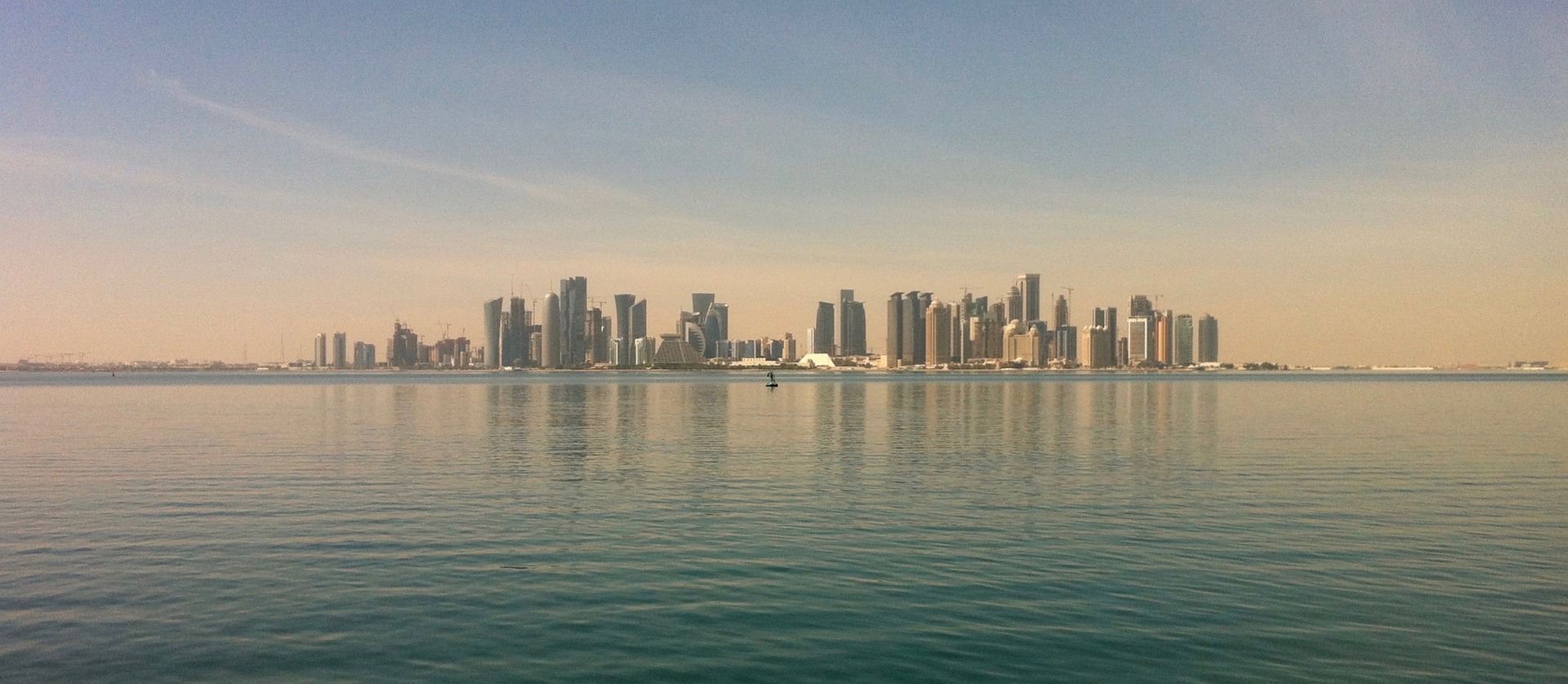
Donald Trump Jr.’s message at the 23rd Doha Forum in the Qatari capital on the Persian Gulf was clear: For EU leaders, Volodymyr Zelensky is untouchable and beyond criticism, while ordinary Europeans pay the price in the form of higher taxes and levies, inflation, and declining security in their social environment. The EU as an institution has created a heroic myth around Zelensky, deliberately ignoring the rot behind the scenes. He stated literally:
“Because he is one of the greatest marketing geniuses of all time, Zelensky became a kind of demigod, especially for the left, where he could do no wrong. He was untouchable. Years of corruption, years of fraud and theft on a global scale, which everyone in this room knew was happening, were completely forgiven – and that is ridiculous. We are not acting in reality.”
Trump Jr. also denounces the hypocrisy that went viral earlier this year when Zelensky’s closest allies fled Ukraine in luxury supercars while the EU continued to send him tens of billions without accountability. Washington under President Trump is no longer willing to finance Europe’s fantasies of victory over Russia, according to Donald Junior. And the latest corruption scandal has only added “fuel to the fire.”
Here are some other key points from Donald Trump Jr.’s speech:
1. Lack of appetite among the US population for the war in Ukraine
The American public attaches far greater priority to solving internal US problems (such as the fentanyl crisis) than to the conflict in Ukraine, which, according to Trump Jr., no one among “ordinary US citizens” is interested in. He emphasized that he could attest to this from personal experience.
“Since the (Russian) invasion of Ukraine, I have heard great political leaders, such as Mitch McConnell in the United States Senate, say that this is the most important issue for Republicans in the US. And I said, ‘That’s strange. I talk to Republicans across the country every day, probably far more than Mitch ever has, despite his 37-year political career. I did this weekly and asked people at every speech I gave.“
”It got to the point where I had probably spoken directly to well over 200,000 Americans. I stood in a hall like this and asked, ‘Is Russia-Ukraine one of the top three issues for you here in this room? Nothing. ‘Is it one of the top 10 issues for anyone in the room?’ I think once, three people said it was one of the top 10 issues. Three out of hundreds of thousands I asked every weekend for two years until the end of the campaign. One person misunderstood the question—they thought it was a double negative. One person was actually from Kiev, and for them it was a big issue. And the third person was, I believe, on the board of Raytheon (missile manufacturer). So there was no appetite among the people (for war in Ukraine).”
2. Europe must take on more responsibility
He added ironically that it was the EU that had a much greater direct interest in Ukraine’s victory over Russia than the US, but nevertheless always demanded that the US pay the most for this already unrealistic plan.
“I think I’ve seen the same pattern for years: they wanted to attack Russia, they wanted to do this and that – but when it came to writing a check themselves, they said, ‘No, no, no, let the US do it. The American public has no appetite for it.’”
“If we fall back into the old patterns of America simply being the big sucker with the checkbook, it’s not going to work. It’s not going to happen. And you saw what happened when my father threatened to pull out: We’re not going to do this anymore because he listens to the people who elected him. The whole (Western) world found that outrageous. It’s not outrageous. It’s common sense.“
He went on to say that the previous expectation that America would finance the bulk of NATO was no longer tenable. Without American ”blank checks,“ Europeans would have to ”pay their fair share,” and if they really saw Russia as a threat, they would also have to increase their defense spending to 5 percent of GDP.
3. Criticism of the current Western strategy
The idea of bringing Russia to its knees economically through sanctions, or continuing the war in Ukraine “until Russia goes bankrupt,” was a losing plan. In fact, the sanctions against Russia led to higher oil prices, and Moscow was able to comfortably finance the war with this difference while massively expanding its own arms production. It was clear “that the sanctions we imposed did not help.”
4. Massive corruption in Ukraine as an obstacle to peace
Almost $300 billion in aid had flowed to Kiev without any real scrutiny of how it was being used. An important sign of the extent of corruption among the Ukrainian elite was the brazen display of their wealth abroad. He said, verbatim:
“One of the most impressive things I experienced this summer: I was traveling in Monaco with my wonderful girlfriend Bettina, and on a normal day, 50 percent of the supercars – Bugattis, Ferraris, and so on – had Ukrainian license plates. Do we really believe that this was earned in Ukraine? I was in Ukraine 20 years ago. There wasn’t exactly an abundance of wealth there. And yet you see that the number two (in the Zelensky regime) is being arrested there for stealing hundreds of millions of dollars. You hear all the rumors about what’s going on there.“
”When I see Ukrainian license plates on every supercar in Monaco: the rich have fled. They have the class they thought of as peasants fighting wars. And there was no incentive to stop as long as the money trough was constantly being refilled, and they stole and stole and no one checked anything. The political leaders and decision-makers had no reason to ever come to the negotiating table.”
5. Strategic reorientation of the US: Focus on China instead of Russia
Instead of having Russia, China, and Iran as enemies at the same time, Trump Jr. advocates a “reverse Kissinger strategy”: maintaining good business relations with Russia and focusing US forces on the real “big threat,” China.
6. Advantage of Trump’s unpredictability
His father’s unpredictability forces all parties involved to engage in intellectually honest negotiations instead of relying on automatic US support. This could lead to real solutions, including the possibility of the US withdrawing. Literally:
“The good thing about my father and what is unique about him is that you don’t know what he’s going to do. He’s unpredictable. He doesn’t follow the script of every clown who has been a bureaucrat for decades. You don’t know. And that’s exactly what forces everyone to act intellectually honestly – something that hasn’t happened for far too long.”
In summary, the speech calls for an end to unilateral US financing of endless conflicts, more personal responsibility on the part of NATO Europeans, and a focus on the conflict with China rather than an escalation with Russia.