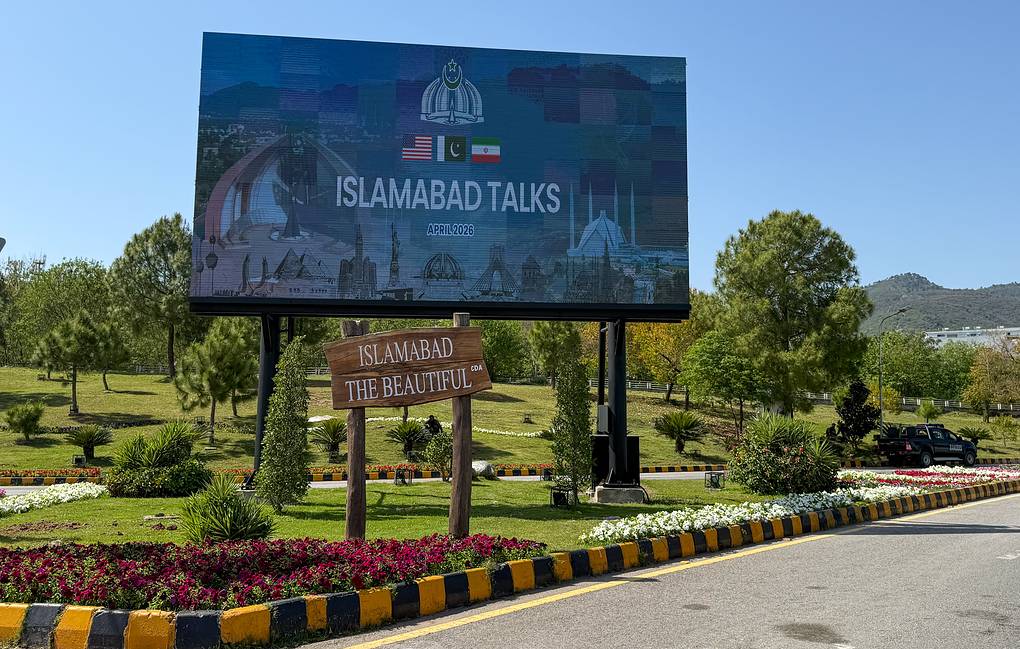
Moscow, Russia (Weltexpress). High-stakes talks between the United States and Iran, scheduled to take place in Islamabad, will begin on April 11, according to Al Hadath TV.
The negotiations in the Pakistani capital may last two to three days, an envoy of the Iranian leader told TASS.
TASS has compiled the key details known so far.
Negotiations
- Key talks between the United States and Iran, scheduled to take place in Islamabad, will begin on April 11, according to Al Hadath TV.
- Earlier, The Wall Street Journal reported, citing sources, that an Iranian delegation had arrived in Islamabad to participate in negotiations with the United States.
- The talks in Pakistan between Iran and the United States could last two to three days, Abdul Majid Hakim Elahi, a representative of the Islamic Republic’s supreme leader, told TASS.
- Pakistani authorities have allowed participants in the US-Iran talks in Islamabad to obtain visas upon arrival, the Islamic Republic’s Foreign Minister Ishaq Dar said.
Iran’s statements
- The attack by the United States and Israel on Iran during negotiations between Tehran and Washington in Geneva constitutes a war crime, according to a press release from the Islamic Republic’s Foreign Ministry.
- The Iranian armed forces have defeated the United States and Israel, forcing them to change their strategic position.
- Iran’s 10-point plan will serve as the basis for further negotiations on a peaceful settlement in the Middle East.
- Iranian authorities oppose a ceasefire that, instead of genuine diplomacy, would allow the United States and Israel to rearm and resume hostilities.
- Iran’s actions in the Middle East should not be viewed as attacks on third countries, as they have targeted only US facilities in the region, the ministry noted.
- Tehran will demand reparations from the United States and its allies for the damage caused by strikes. If rejected, Iran will compensate for the losses by seizing US assets and property, Abdul Majid Hakim Elahi said.
- He added that Iran, while skeptical of Washington’s intentions, hopes for successful negotiations in Islamabad and the conclusion of a comprehensive agreement.
Delegation lineups
- The Iranian delegation is led by Mohammad Bagher Ghalibaf, Speaker of the Majlis, Iran’s parliament, and Foreign Minister Abbas Araghchi, The Wall Street Journal reported, citing sources.
- Pakistan asked US Special Envoy Steve Witkoff to include Vice President JD Vance in the US delegation for the talks with Iran, the newspaper reported.
- Following Islamabad’s request, US President Donald Trump asked the vice president to lead the peace effort, the report said.
- Vance stated that he had received clear instructions from Trump on how to negotiate with Iran.
Ceasefire breach
- Israel does not intend to halt its attacks on Lebanon but may scale them back at Trump’s request, The Wall Street Journal reported.
- The US administration fears these strikes could undermine negotiations with Iran and efforts to reopen the Strait of Hormuz.
- The report noted that Trump has not yet asked Israel to scale back its campaign against the Shiite organization Hezbollah.
Strait of Hormuz
- Iran controls the Strait of Hormuz because the war with the United States and Israel is not over, and Tehran will reopen it once the fighting ends, Abdul Majid Hakim Elahi told TASS.
- Reports about introducing tolls for ships passing through the strait are just rumors, he said.
- About 3,200 ships have gathered in the area, awaiting safe passage, Fox News reported.
- Of these, around 800 are tankers and dry cargo vessels.
- Nearly 20,000 sailors in the Persian Gulf region are awaiting clarification on safe transit through the strait, the network added.
Note:
See the articles
- Tucker Carlson doubts US-Iran truce is victory for Washington by TASS
- Recent developments in the Middle East by TASS
- Two power plants in Kuwait damaged in Iranian attack – energy ministry by TASS
in WELTEXPRESS