Berlin, Germany (Weltexpress). Against the backdrop of fierce attacks on Elon Musk – whom European politicians and the media in particular are blaming for the massive, sudden technical limitations affecting Starlink – Vance highlights the Europeans’ schizophrenic behaviour towards Musk.
Without American technology, Kyiv is left out in the cold
This is currently evident in the context of Elon Musk’s military satellite service, Starlink. The Ukrainian army is clearly entirely dependent on its functioning. For days now, the washed-up and non-re-elected Ukrainian ‘presidential figure’ Zelenskyy has been sounding the alarm amongst his supporters in the West because Starlink is now only functioning with massive restrictions. He blames Elon Musk, in his sweaty green T-shirt, for this alleged betrayal.
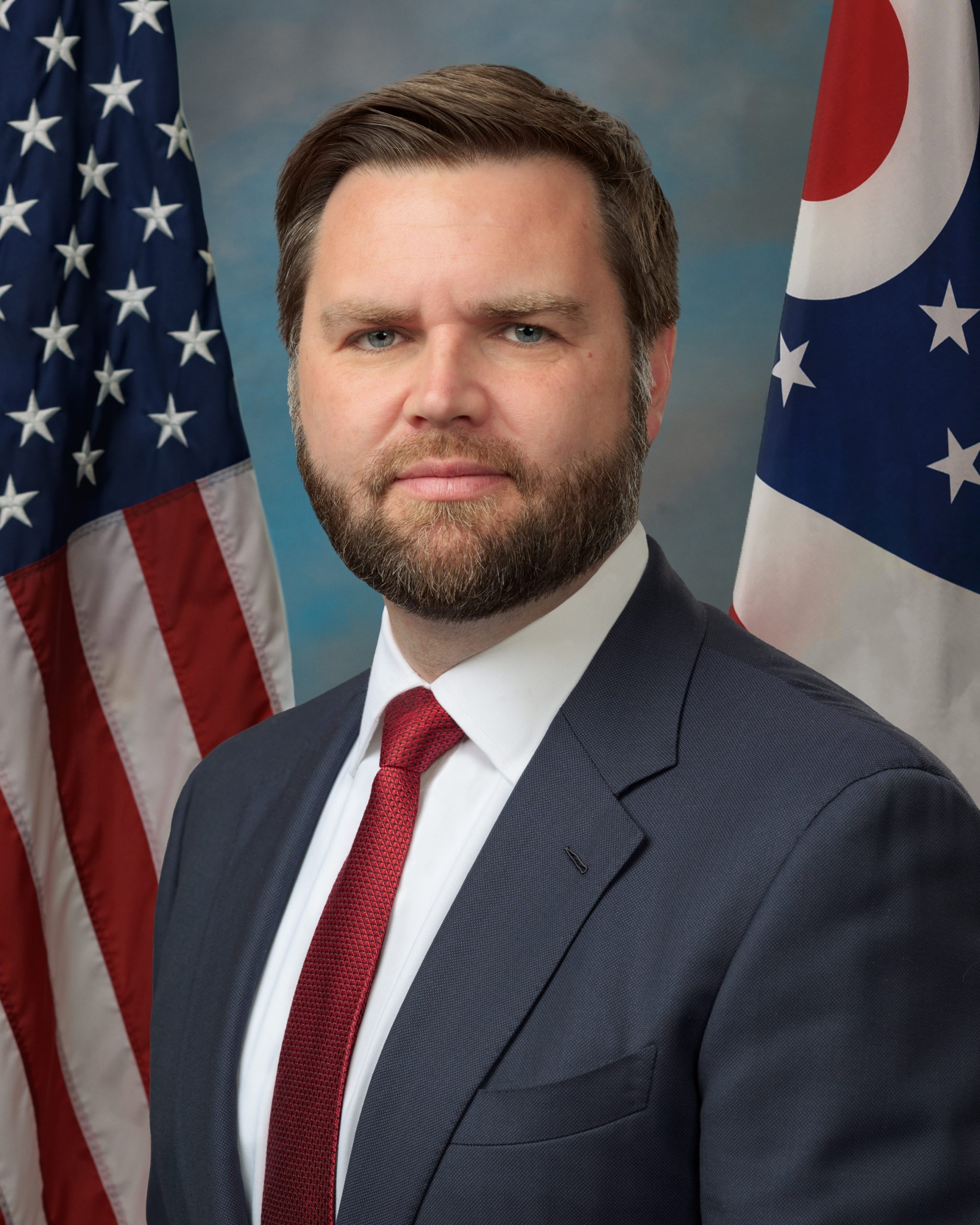
US Vice-President JD Vance has now come to Elon Musk’s defence in an interview with the Times of India – which, according to its own publicity, is the world’s highest-circulation English-language newspaper – and instead attacked Europe’s political leadership for its contradictory policies. At the same time, Vance made it clear in the interview that Washington’s policy towards Russia is not determined by the interests of Kyiv or other countries.
Starlink crisis reveals Europe’s technological dependence
According to a report in the Wall Street Journal, cited by the news portal Times of India, Musk is said to have ordered a speed limit on a military-use variant of Starlink. The restrictions are said to have come into effect on 14 October and allegedly rendered some Ukrainian drones and defence measures virtually useless.
The dispute over the American satellite service Starlink has escalated into a transatlantic political row over US support for Ukraine. US Vice-President JD Vance responded to the allegations with a remarkable defence of Musk. At the same time, he seized the opportunity to criticise European governments for their technological and military dependence on the United States.
Once again, Zelenskyy slipped into the role of victim – a role he masters so convincingly – and lamented that Ukrainian soldiers would die as a result of Musk’s decisions if the restrictions were not lifted. He said Ukrainian frontline logistics and Ukrainian attacks on medium-range targets in Russia would be particularly affected.
Vance: “This is not a question of Elon Musk”
When asked by a journalist whether the events should be investigated, Vance demonstratively backed the entrepreneur: “Well, I think, fundamentally, one must bear in mind that Elon Musk runs a private company. And I find it entirely understandable that he does not wish to be drawn into the conflict in the midst of a war between two states without the US government effectively dictating to him what he should do.”
“That’s why I don’t believe this is really about Elon. At its core, it’s much more about the question of what policy America will pursue towards Ukraine and Russia. As I’ve already said, we’re currently working on resuming negotiations.”
Then came Vance’s knockout hook to the Europeans’ chin: “However, I do find it a little ironic that the European countries – which, of course, have nothing comparable to the technologies Elon has developed with Starlink, Stargaze and SpaceX’s various internet services – have, almost without exception, decided to wage a veritable war against SpaceX with regulatory and licensing requirements.”
“And now they’re all running to SpaceX and saying: ‘Please do what we’re asking of you.’”
“In my view, this underlines a point the President has been making for years: European countries are dependent on American technology, American companies and the American military. At the same time, Europe’s political leaders love to criticise, of all things, the very American allies on whom they are so heavily dependent.
Thank you very much, everyone.”
The EU eunuchs and Elon Musk: fighting him as the personification of evil whilst simultaneously begging him for help
The political accusation goes far beyond the current Starlink controversy. Europe claims autonomy in foreign policy, yet possesses neither an equivalent satellite communications system of its own nor sufficient military capabilities to support Ukraine independently of the US.
The statement is politically explosive because it openly addresses a fundamental weakness in Europe’s policy towards Ukraine: whilst Brussels and key European capitals formulate far-reaching military and geopolitical objectives, practical implementation in key areas remains dependent on American technologies.
Who ordered the Starlink restrictions?
This means that differing accounts exist side by side. Whether the restrictions were an independent corporate decision or part of a political pressure strategy cannot be conclusively determined on the basis of the available material.
The central question of the controversy remains unanswered: did Musk act independently, or were the restrictions coordinated with the Trump administration?
According to the Wall Street Journal, some US government officials stated that Musk had made the decision alone. Trump had not ordered any corresponding retaliatory measures against Ukraine.
Other sources, however, claimed that Musk had previously spoken to several high-ranking government officials, including Trump himself.
Trump denied having ordered the restrictions. He stated that he did not know who was responsible, but wanted to find out.
Musk, for his part, pointed out that decisions regarding restrictions on the military Starshield services ultimately lay with the Pentagon or the President.
Defence Secretary Pete Hegseth also denied that the Pentagon had withdrawn support services.
Washington seeks renewed negotiations with Moscow
Alongside the Starlink dispute, Vance confirmed new diplomatic efforts to bring the war in Ukraine to an end.
When asked why progress should be possible this time, despite earlier attempts at negotiation having failed, he rejected the suggestion that Russia was fundamentally refusing to engage in talks.
“I think both countries have agreed to return to the negotiating table,” Vance explained.
A peace agreement has not yet been reached because the positions of both sides on individual negotiating issues are still too far apart.
The US Special Envoy, Steve Witkoff, has resumed the talks and has spoken with both the Russian and Ukrainian leaderships in recent days.
Vance expressed cautious optimism. Diplomacy, he said, meant making repeated attempts, even if the prospects of success were initially slim.
Speaking about Witkoff, the US negotiating team and President Trump, he said, in essence, that he admired their willingness to tackle difficult tasks, even though there was still a huge mountain of problems to overcome.
Attacks on Ukrainian refineries as an additional point of conflict
The Starlink controversy coincides with growing tensions over Ukrainian attacks on Russian oil refineries.
Trump and Musk have criticised these attacks. According to the news report, Trump also held them partly responsible for rising oil prices. The timing of the criticism of Zelenskyy and the Starlink restrictions fuelled suspicions in Ukraine that the two developments might be linked.
However, there is no evidence of a targeted American punitive measure. Politically, however, there is a fundamental conflict of interests: the Ukrainian leadership wishes to continue inflicting as much military and economic damage on Russia as possible and is trying by every means to draw the Americans into its war against Russia. But this was already a red line for the administration of Trump’s predecessor, Joe Biden – one that nobody in Washington wanted to cross – and the situation is no different under the Trump administration. The Donald Trump administration, on the other hand, is placing greater emphasis on negotiations, whilst also taking into account the impact of the war on the American economy.
The real message: America decides for itself
JD Vance’s political statements can be distilled into three key messages.
Firstly, Washington does not wish to automatically equate responsibility for private American technology companies with an obligation to provide unlimited military support to Ukraine. According to the Wall Street Journal, some American government officials stated that Musk had made the decision on his own. Trump had not ordered any corresponding retaliatory measures against Ukraine.
What we are seeing here would be an elegant solution for Washington to withdraw, step by step and whilst saving face politically, from the long-lost conflict in Ukraine. All that would then be needed is for other major US defence contractors to withdraw from key areas of the Ukraine business for private reasons, and voilà: the war in Ukraine would be over without Trump and his administration being blamed, as there would be no corresponding political directive. The private sector – that is, the market – has decided, and its ways are, as is well known, ‘inscrutable’.
Secondly, Vance accuses European governments of projecting an air of self-confidence in foreign policy, even though they remain dependent on American technologies, companies and armed forces in crucial areas.
Thirdly, he makes it clear that American policy towards Russia and Ukraine is determined by the government in Washington – not by Elon Musk, European governments or the expectations of Kyiv.
That was a clear statement!