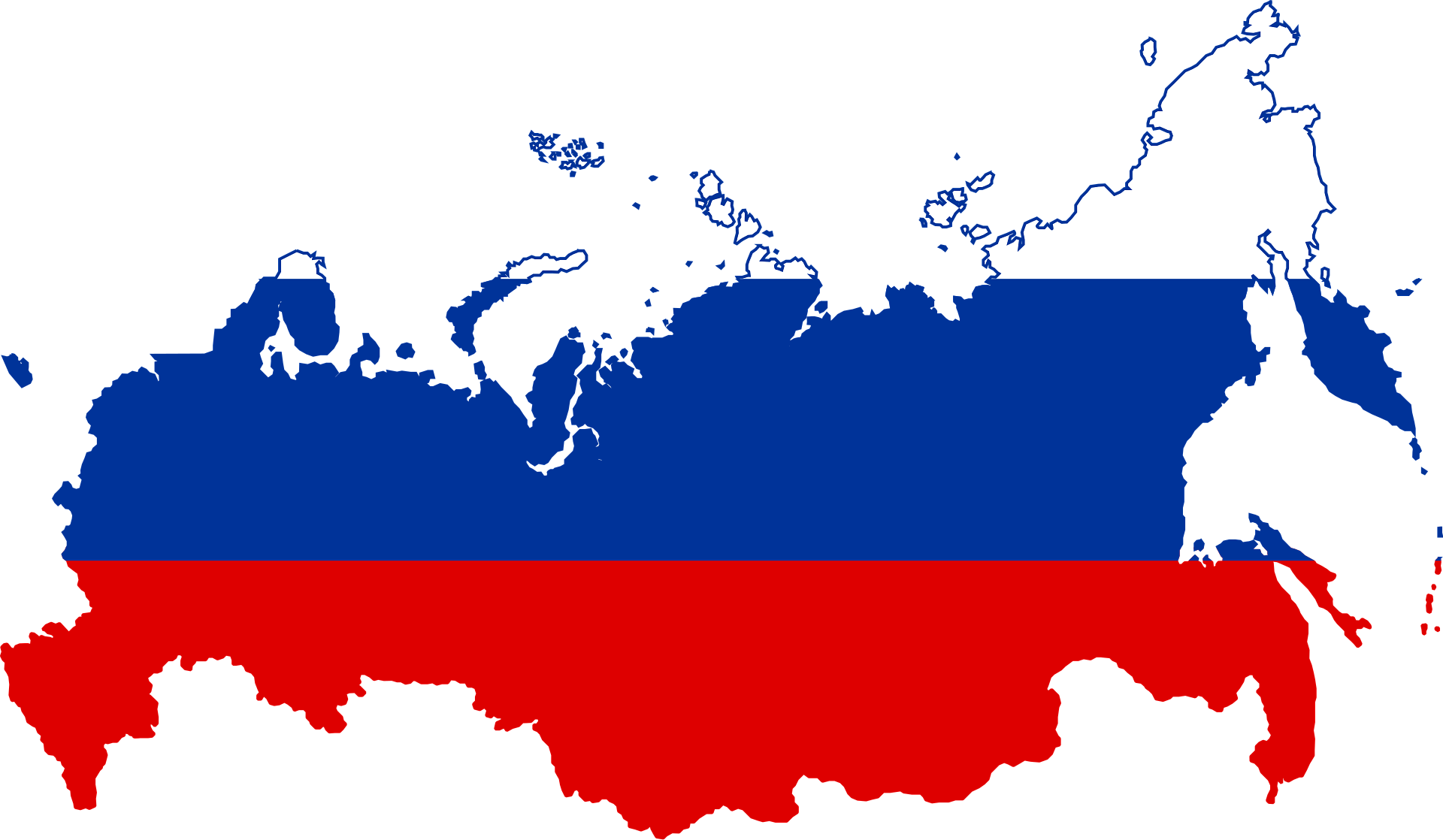
Berlin, FRG (Weltexpress). Russia is huge, it has eleven time zones, and a large part of the country lies in Europe. This fact is suppressed and is gradually being forgotten. The centuries-old ties in economics, culture, and science, which were revived in the 1980s, were maliciously hampered and gradually severed by the West, led by the US. Anyone who wants to fly from Berlin to Moscow today has to take a detour via Istanbul.
In his speech to the German Bundestag in 2001 – which was still possible at the time! – Vladimir Putin mentioned Johann Wolfgang von Goethe, Friedrich Schiller, and Immanuel Kant, and said that culture had always been our common asset, uniting peoples. Should that really be a thing of the past? It seems so, now that even culture has been politicized.
Fanaticism, hatred, and incitement
For years, the Ukrainian flag flew in front of many public and private buildings in Germany, the Brandenburg Gate was illuminated in blue and yellow at night, and bakeries sold blue and yellow bread bags. The Tagesschau (ARD news) regularly reports on Russia’s “brutal war of aggression,” and almost every evening, mutilated corpses and pitiful mothers with their children are shown. The causes of the war, however, are ignored.
While the Ukrainian army heroically defends the fatherland, according to statements in politics and the media, Russian soldiers allegedly continue to commit war crimes, instigated by Vladimir Putin. He wants to subjugate all of Europe, they say. Volodymyr Zelenskyy was able to rant about this in large-format video inserts in front of the parliaments of other states and the UN Security Council.
No wonder that many people in Germany agree that Ukraine should be supported in its “fight against evil” with billions in payments and the delivery of heavy weapons. Appeals were written, money was collected, and Germany took in more than a million refugees, though the final number may be two or three million—no one knows for sure. Anyone who identifies themselves as Russian in public may have to be careful.
Psychological warfare does not stop at culture and has taken on absurd forms. For example, hatred of everything Russian has led to Russian literature and works on literary history, philosophy, historiography, and sociology being removed from libraries and bookstores in Ukraine. Under the slogan “Russian literature into the waste paper,” millions of books were “disposed of,” [1] which corresponds to about half of Ukraine’s library holdings.
This cultural barbarism also spread to other European countries. In the Baltic states, as in Ukraine, monuments from the Soviet era were destroyed and Russian literature was banned from the shelves, even though a large part of the population has Russian roots. [2] And in Germany, too, fanatics demanded that works by Russian authors be removed or excluded from sale in bookstores. [3] This included not only contemporary works, but even classics such as Tolstoy, Dostoevsky, Chekhov, Gorky, and Pushkin.
Ostracizing Russian culture
The measures, reminiscent of the book burnings of 1933 and the Nazi boycott of Jewish art and culture, [4] eventually spread to all areas of cultural life in the so-called Western world of values. The city of Munich dismissed the chief conductor of the Philharmonic Orchestra, Valery Gergiev, on the grounds that he had not, despite being asked to do so, “clearly and unambiguously distanced himself from the brutal war of aggression“ that Putin was waging against Ukraine. Mayor Dieter Reiter (SPD) declared that there would be no further concerts by the Munich Philharmonic under Gergiev’s baton. And the famous Russian opera singer Anna Netrebko was banned from performing at the New York Metropolitan Opera after she refused to distance herself from President Vladimir Putin. [6] Under pressure from artistic director Peter Gelb, she had to withdraw from the production of the opera “Turandot”; her role was then, significantly, given to a Ukrainian soprano.
A strange phenomenon can be observed: Russian artists are being ostracized everywhere, while Ukrainian artists, regardless of their qualifications, are succeeding. A scandalous, exemplary incident in the German literary world, for example, was the awarding of the 2022 Peace Prize of the German Book Trade to the Ukrainian Serhij Zhandan, who considers Russians to be “animals” and “trash.” In his award-winning book, which he presented in Frankfurt am Main during the book fair, he wrote: “The Russians are barbarians, they have come to destroy our history, our culture, our education … Burn in hell, you pigs.” [7] No charges were brought for incitement of the people; instead, the author was praised and rewarded for his racism and hate speech. The list of shame is long and is likely to have burned itself into the collective consciousness of more than just Russians.
I have documented the steady deterioration of relations between Germany and Russia in several books, for example in “State of Emergency: Geopolitical Insights and Analyses in Light of the Ukraine Conflict.” The relationship is deeply fractured, and should there be a rapprochement, which is urgently needed and desirable, it will take a long time to restore trust.
Every day, we see that much has been lost, possibly irretrievably. At the behest of narrow-minded people, everything Russian is to disappear, and even silliness is not shied away from. For example, “Russian bread” is now called “ABC cookies” and “Russian streusel cake” is now simply “streusel cake” – it is not entirely unreasonable to assume that it will soon be renamed “Ukrainian streusel cake.”
Americanization and Russophobia
Our American “friends” are more subtle about this. They supply radio stations with their music and television stations with films and series. This means they no longer need to make a great effort to reshape our language, our culture, and our community; it happens all by itself. „Bahnauskunft“ is naturally called “Service Point“,“Überschriften“ are “Headlines,” our „Sportkleidung“ is “Sportswear,” and kids play “outdoors.”
It becomes deadly serious when a diplomatic handbook for EU states states: “European diplomats should avoid any bilateral contacts with Russian representatives. They are prohibited from attending events organized by the Russian side. This also applies to formal receptions on the occasion of Diplomat Day on November 4, February 10, February 23, May 9, and Russia Day on June 12. Russian diplomats may not be invited to events and receptions organized by EU authorities and representations or by the foreign ministries of EU member states. European diplomats are not prohibited from attending events organized by third countries in which Russian representatives participate. However, it is important to avoid direct contact with Russian representatives. It is recommended to inform the host in advance that European and Russian delegations should avoid being seen together in photos or participating in official meetings.”[8] What sick mind comes up with such regulations? Does Russia no longer belong to Europe, and who decides that?
A note from the German government to the Embassy of the Russian Federation in Berlin in April 2024, stating that the participation of Russian representatives in commemorative events marking the 79th anniversary of the liberation of concentration camp prisoners is undesirable, left us completely speechless. This is incredibly malicious, because after all, the prisoners of several concentration camps were liberated by the Red Army in 1945. A spokeswoman for the Russian Foreign Ministry stated: “We regard this provocative outburst as another step by the German side aimed at politicizing the historical memory of the course and outcome of World War II in an anti-Russian manner. We believe that this is an attempt to destroy the historical memory and truth about World War II on the part of official Berlin, which clearly supports and encourages this attitude.” [9]
Russia is to be isolated and humiliated. The Russophobia prevalent among Western politicians, journalists, and large sections of the German population, which often turns into hatred, has been systematically fueled, and the German government’s behavior in this regard is shameful and painful to the soul.
What doesn’t fit is suppressed
But there is also another side to the story: according to surveys conducted in the spring of 2024, many Germans want peaceful relations with Russia, with 48 percent even understanding that it feels threatened by the West. [10] But there is no mention of this in the media: what doesn’t fit is suppressed. This also applies to the speeches and statements made by the Russian president.
In a conversation with Russian artists in March 2024, Vladimir Putin commented on the hostile treatment of Russian culture in the West: “When we hear someone talking about abolishing Russian culture and the culture of the peoples of Russia in general, we know that only unwise people can say such things … Culture, which forms the spiritual foundation of the nation and underpins our identity, naturally plays a very important role in critical, difficult, and even tragic moments, because it gives strength to the nation and to each individual.” Russia views its own culture in the context of world culture, without excluding anything from this context. Therefore, it has never done what other countries have done to Russian culture and Russian artists.
Putin emphasized: “There are no unfriendly countries for us, but there are elites in these countries who are unfriendly towards us.” Commenting on the cultural situation in the West, he said: “There is much that is good in European culture today, but there are also many problems. This gives us a unique opportunity to see what is happening in post-industrial society and in the world, and to respond appropriately and in a timely manner.” [11]
Sources and notes:
[1] See https://taz.de/Buecherentsorgung-in-der-Ukraine/!5897280/
[2] See www.nordisch.info/litauen/buchlaeden-verbannen-russische-literatur/
[3] See Stern, July 25, 2022; www.stern.de/kultur/buecher/russland– literaturagentin-ist-gegen-boykott-von-russischen-verlagen-32561554.html
[4] Cf. www.wsws.org/de/articles/2022/06/19/ooyj-j19.html
[5] Quoted as ZDF heute, March 1, 2022; www.zdf.de/nachrichten/politik/muenchen-entlaesst-chefdirigent-der-philharmoniker-100.html
[6] Cf. BR Klassik, May 23, 2022; www.br-klassik.de/aktuell/news-kritik/anna-netrebko-interview-met-oper-new-york-ukraine-krieg-putin-russland-100.html
[7] Quoted as NachDenkSeiten, October 24, 2022; www.nachdenkseiten.de/?p=89603