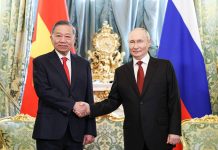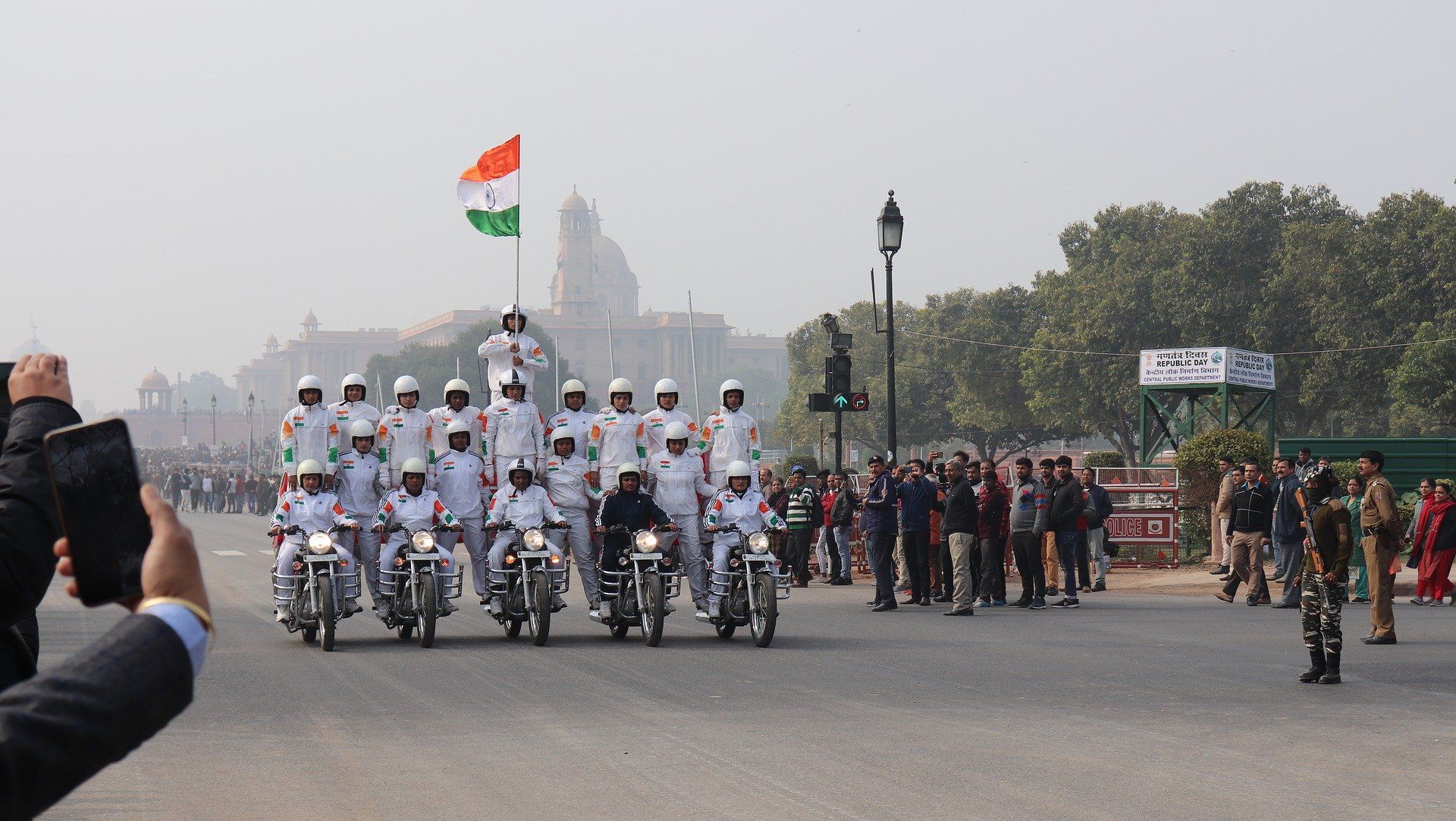
Berlin, Germany (Weltexpress). Russian President Vladimir Putin, who according to Western propaganda is “internationally isolated,” is a busy man. On Wednesday, he received high-ranking visitors from Washington, and a day later, he was welcomed with great pomp as a trusted friend in New Delhi for the 23rd India-Russia Summit.
In New Delhi, there are high expectations for Putin’s visit, which is intended to underscore the “special and privileged strategic partnership” between the two countries. Indian media coverage focuses primarily on the decades of good relations in the field of military-technical cooperation with Russia. Russia is also seeking even closer relations with India. Even before Putin’s departure on Tuesday, December 2, the Russian State Duma ratified the agreement with India on mutual logistical support (Relos).
Vyacheslav Volodin, speaker of the State Duma, said: “Our relations with India are strategic and comprehensive, and we value them. We understand that today’s ratification of the agreement is another step towards reciprocity and, of course, the development of our relations.”
This pact also provides for mutual support in military operations, exercises, and disaster relief. Among other things, it enables the Indian Navy to establish a stronger presence in the Arctic and strengthens its position as a maritime power, while also offering new opportunities for India’s scientific, technological, and economic ambitions in this region. It also enables joint civil and military bases, including refueling and repairs, while expanding Russia’s reach in the Indian Ocean. In the field of armaments, India is interested in purchasing Russian S-500 air defense systems as well as Su-57 fighter jets and their possible construction under Russian license.
The visit, which is taking place at the invitation of Prime Minister Narendra Modi, is Putin’s first trip to India in four years, since the start of the war in Ukraine in February 2022.
The program for Putin’s 30-hour stay is packed with official and “private” talks and began with a private dinner with leading politicians, ministers, and Indian business representatives. Several intergovernmental and commercial agreements are to be signed.
Focus on defense cooperation
As mentioned earlier in connection with the ratification of the RELOS agreement by the Russian State Duma, deepening military cooperation between the two nations is a key issue. However, no concrete agreements on the purchase of the Russian fifth-generation fighter jet (Su-57) and the unique, world-leading S-500 air defense system are expected during the visit. Putin will be accompanied by Defense Minister Andrei Belousov and representatives of the arms exporter Rosoboronexport.
Energy and trade despite sanctions
Despite Western sanctions, India remains the largest importer of Russian oil delivered by sea, although deliveries in December 2025 fell to their lowest level in three years. In the West, the impending US secondary sanctions are cited as the reason for this. However, problems that have arisen with India’s payment for oil deliveries in rupees could also be behind the decline in Russian oil exports to China. The current 23rd summit is intended to stabilize energy relations. Russian companies such as Rosneft and GazpromNeft, as well as Sberbank, are seeking further investments in India in order to invest their surplus rupees in Indian infrastructure and other assets.
Geopolitical balance
Despite its good and close relations with Russia, India continues to pursue a diversification strategy: over the past ten years, it has purchased US weapons worth $30 billion, while at the same time expanding its domestic arms production. Shortly before Putin’s arrival, India concluded a $946 million deal for US helicopters – a signal to Russia that American competition still exists.
Nevertheless, Putin’s invitation and his visit to India must be seen as a signal to the West that New Delhi is not abandoning its traditional partnership with Moscow despite Western pressure. At the same time, the Indian Foreign Ministry recently rejected a joint media column by the ambassadors of Britain, France, and Germany criticizing the close India-Russia relations as “unacceptable interference” in India’s affairs. The summit is seen as an important test of India’s foreign policy balance between Russia, the West, and its own strategic interests in the Indo-Pacific.