Berlin, Germany (Weltexpress). There were crucial differences in the legal approach taken when investigating the two terrorist attacks. In the case of Lockerbie, there was a proper ‘inquest’, followed by criminal proceedings before a criminal court. In the case of 9/11, there was an elaborate political spectacle.
The attacks in New York on 11 September 2001 and in Lockerbie on 21 December 1988 were the largest terrorist incidents investigated by the United States to date
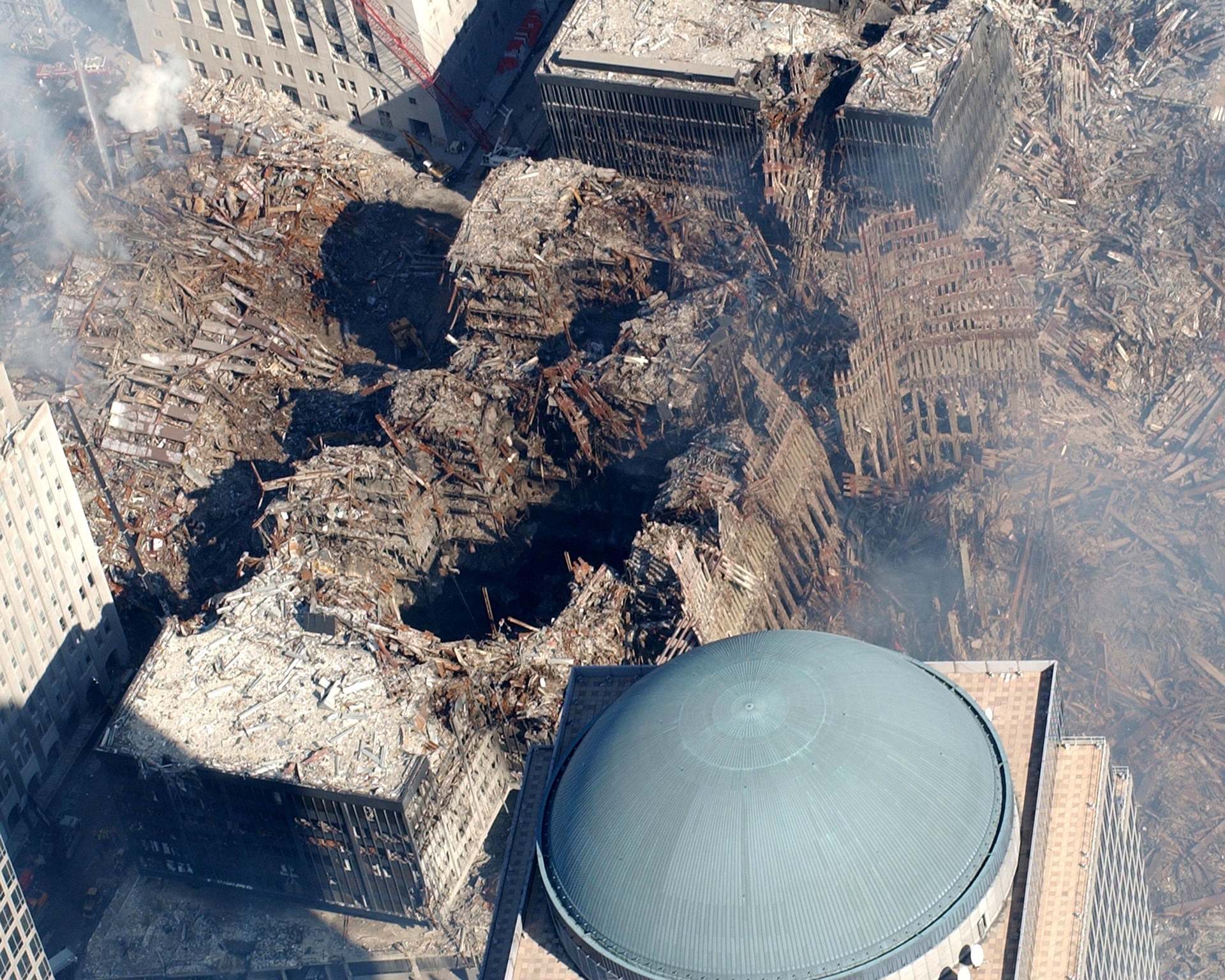
(in the case of Lockerbie, in close partnership with the United Kingdom). In the terrorist attack on Pan Am Flight 103, a Boeing aircraft that was blown up by a time bomb at high altitude over Lockerbie, Scotland, on 21 December 1988, 190 US citizens were among the 270 people killed. Among the 2,977 people killed on 9/11 were around 2,500 US citizens.
However, the two investigations differed significantly in scope, legal procedures and the nature of the legal action taken. It is striking that the Lockerbie case, in which 190 US citizens were killed, was investigated much more thoroughly than the attacks of 11 September 2001, in which 13 times as many US citizens died as in Lockerbie.
In the Lockerbie case, there was a joint US-British effort led by the FBI (‘Scotbom’) and the Scottish police, with support from other countries. The investigation relied heavily on forensic evidence meticulously recovered from the crash site (bomb fragments and other minute details), which ultimately led to the identification of the bomber and those behind him.
The situation in New York was quite different. Here, there was no weeks-long search for forensic evidence. Instead, anything that might have pointed to a course of events different from the official version was disposed of as quickly as possible. For the US government and its compliant media, the culprits had already been identified just a few hours after the attack: namely, Bin Laden and his trainee Boeing pilots, who had allegedly hijacked the planes using carpet knives. Why on earth would anyone need to look any further for culprits!?
In the Lockerbie case, an ‘inquest’ was held before a special Scottish court. Under British law, an inquest is a public judicial inquiry into an unexplained, violent or unusual death. It seeks to establish who died and when, where and how the death occurred. However, an inquest is not a criminal trial and, as a matter of principle, may not find any specific person guilty of a criminal offence.
In the Lockerbie case, the inquest was also followed by a full-fledged criminal trial. Two defendants stood trial before a court sitting under Scottish law (no jury, but three judges) at Camp Zeist; the defendant Abdelbaset al-Megrahi was convicted, whilst Lamin Khalifah Fhimah was acquitted.
The 9/11 Commission, by contrast, was not a court but an independent, cross-party investigative body established by federal law. Its purpose was to set out the background and circumstances of the attacks and to formulate recommendations for preventing further attacks. It could question witnesses and examine documents, but could not charge, convict or punish anyone.
With great effort and even more media fanfare, the 9/11 Commission held public hearings for 19 days, heard testimony from around 160 witnesses, conducted more than 1,200 interviews and reportedly studied thousands of documents. It then published a detailed public report, which was subsequently available in every US bookshop.
Through this enormous effort, the George W. Bush administration succeeded in making the general public believe that a genuine investigation into the circumstances surrounding 9/11 and the search for those responsible had taken place. The media never tired of highlighting the FBI’s investigation – involving thousands of agents – as the largest in the history of the federal police. Nevertheless, the Commission’s activities did not even come close to an ‘inquest’ or proceedings before a criminal court. The Commission did not even identify the individuals responsible for the alleged catastrophic failure of the US intelligence services.
Essentially, the difference between the investigations into the two largest terrorist attacks against US citizens lies in the fact that the Lockerbie case was not only investigated but also tried in a criminal court, and in public; in the case of the 9/11 Commission, the main public inquiry remained at the level of an investigative commission conducted with great fanfare and media hype, which is why it was also compared to a Hollywood show.
In the Lockerbie case, witness statements were given under oath. A key feature of the Lockerbie case was that it was a concluded, adversarial criminal trial in which evidence was examined through the examination and cross-examination of sworn witnesses in open court. The judges issued a detailed written judgement in which they set out their reasoning leading to the formal conviction of the defendant.
Ultimately, the US investigations into the 9/11 attacks did not come anywhere near achieving a legal conclusion of the same calibre as in the Lockerbie case. Consequently, there remains a great deal of dissatisfaction in the US amongst the victims’ families and amongst independent scientists and engineers. They are calling for a proper, criminally relevant investigation into 9/11 at long last, one that examines the entire chain of events and known forensic details in open court. This fervent wish could soon come true, though not in the US, but in the UK.
Note:
See the articles
- The Unanswered Questions of Ground Zero – Series: 25 Years After 9/11 (Part 1/7) by Rainer Rupp
- Just a few seconds’ deviation from a stone in free fall – Series: 25 years after 9/11 (Part 2/7) by Rainer Rupp
- “How can aircraft-grade aluminium penetrate this steel?” – Series: 25 years after 9/11 (Part 3/7) by Rainer Rupp
- The Great Silence on Profiteers, Secret Services and Israel – Series: 25 Years After 9/11 (Part 4/7) by Rainer Rupp
- An untouchable dogma and the investigation that was never allowed to happen – Series: 25 years after 9/11 (Part 5/7) by Rainer Rupp
- Will the official version finally be put before a proper court? – Series: 25 years after 9/11 (Part 7/7) by Rainer Rupp
in WELTEXPRESS.