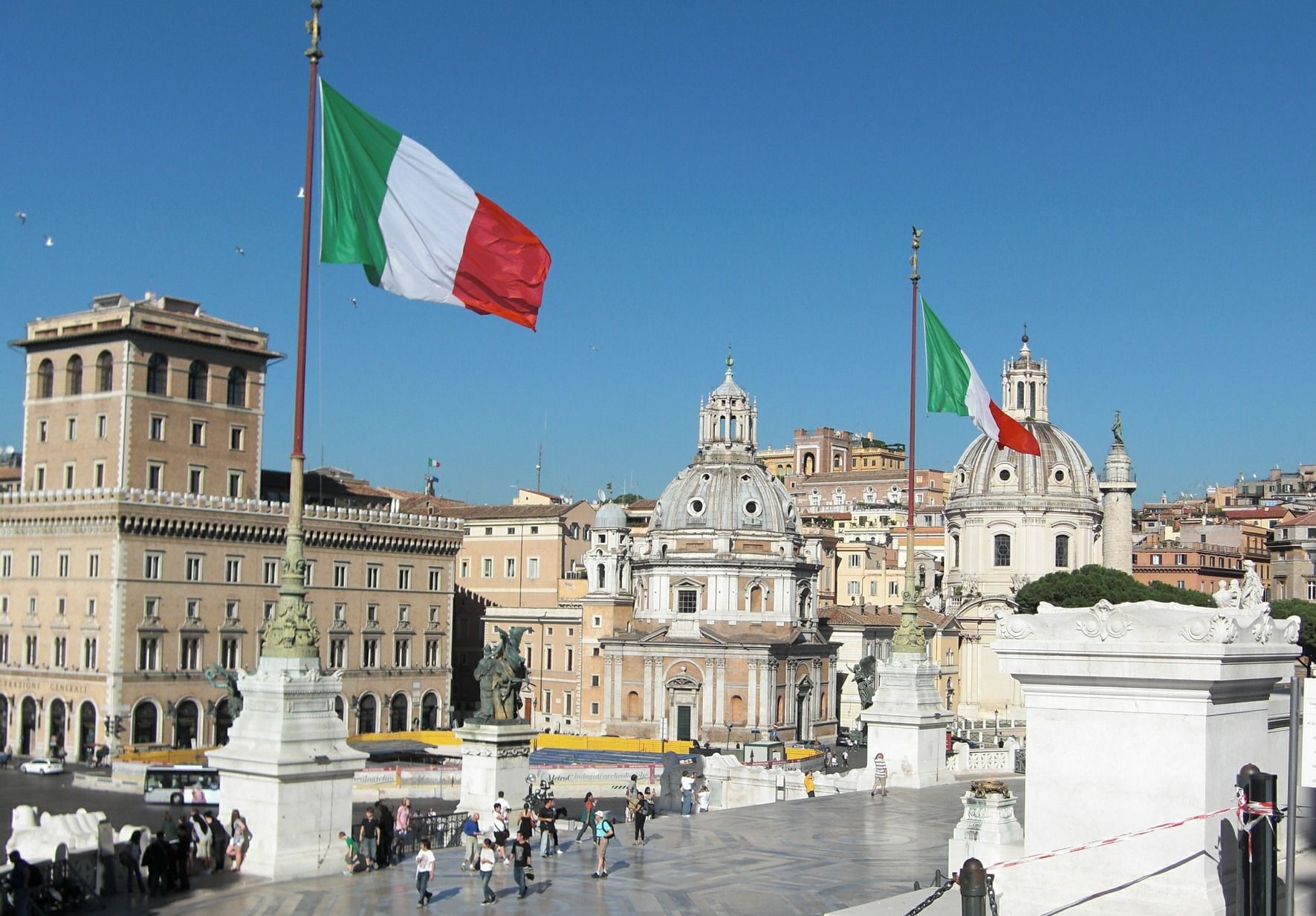
Berlin, Germany (Weltexpress). Whilst the Meloni government is supplying further weapons to Kyiv, the falling standard of living for many citizens is driving them onto the streets. The Italian people are rebelling against Meloni’s forced austerity measures, as she prioritises Ukraine over refurbishing dilapidated schools and hospitals in her own country.
Schools are losing staff, whilst hospitals are calling for billions more in funding. Trade unions and students are mobilising against rearmament and cuts to social services. They are mobilising against a policy that promises security from the distant Russians, but which, by prioritising defence spending, is squeezing the standard of living of many citizens. Even within the governing coalition, resistance to Meloni’s policy on Ukraine is growing.
When the President warns of declining prosperity
Italy’s President Sergio Mattarella has identified a problem whose political causes are increasingly contentious. On 30 October 2026, he stated on the occasion of Italy’s World Savings Day that geopolitical and geo-economic conflicts, together with inflation and stagnating wages, were eroding citizens’ standard of living.
This statement comes at a time of economic strain. According to the National Institute of Statistics (ISTAT), Italian inflation reached 5.4 per cent in October – the highest level since August 2023. Energy and food prices, in particular, have risen.
Yet Mattarella’s warning raises an uncomfortable question: to what extent is Italian policy itself contributing to the growing financial burden on the population? After all, the President has for years supported Italy’s military and economic aid to Ukraine. As early as 13 December 2024, he told Italian diplomats that Kyiv could continue to count on Italy’s resolute military, economic, diplomatic and humanitarian support. On 7 September 2026, he reaffirmed this stance during a meeting with Estonia’s President Alar Karis, though he coupled it with the hope for successful peace negotiations.
Meloni stands by arms supplies – despite opposition
Prime Minister Giorgia Meloni leaves no doubt that aid to Ukraine will, in principle, continue. Just a day ago, on 10 November, she stated during a visit to the EIMA agricultural fair in Bologna that she did not believe Italy’s position would change. Her Defence Minister, Guido Crosetto, had already emphasised on 26 October that Italy’s stance could not change. Aid to Ukraine is not merely support for another state, but an investment in Italy’s own security. However, Italians are finding it increasingly difficult to understand this, let alone support it.
But in Italy, the same caste of EU politicians is at work as in France, Belgium, the Netherlands or here in Germany – politicians who couldn’t care less about the population’s most pressing concerns. Foreign Minister Antonio Tajani also made this argument in an interview in August 2026, revealing his preference for the war in Ukraine to continue when he said that ‘an end to support would force Ukraine into negotiations from a position of weakness. For if Ukraine were to negotiate with Russia alone, that could well mean the war would come to an end.’ However, from the perspective of the EU and Italy’s Foreign Minister, this must not happen under any circumstances, which is why military support for Ukraine must not be withdrawn under any circumstances.
Minister Tajani’s demagogic ‘statement’ is particularly noteworthy. He firmly rejects the accusation that rearmament is coming at the expense of social policy and emphasises that it is, rather, security that is the prerequisite for preserving the European social model.
However, dissent is growing within the governing coalition. Lega leader Matteo Salvini opposes further arms deliveries. His party colleague, Finance Minister Giancarlo Giorgetti, initially refused to sign the new aid package. Meloni and Tajani attributed this to his absence from Brussels.
The thirteenth Italian military aid package for Ukraine is nevertheless set to be approved. Its contents remain secret.
How many billions has Italy already spent?
According to the Ukraine Support Tracker by the Kiel Institute for the World Economy, Italy’s direct bilateral aid commitments amounted to around 4.35 billion euros as at 31 August 2026.
Of this:
- 3.00 billion euros was for military support,
- 475 million euros was for financial aid,
- 876 million euros was for humanitarian assistance.
These figures take into account neither Italy’s calculated share of EU-wide aid nor the full costs of hosting refugees.
Another, broader cost calculation by the ‘War Balance Project’ puts Italy’s total support, including its EU share and refugee costs, at around 12.7 billion euros.
The Italian Ministry of Foreign Affairs , for its part, cites bilateral civilian aid commitments of around three billion euros, albeit using a different definition. The differing figures must therefore not simply be added together.
Regardless of this, general defence expenditure is rising. For 2025, around 45.3 billion euros were reported according to NATO criteria, amounting to roughly two per cent of Italy’s gross domestic product. However, a significant portion of the statistical increase was due to a reclassification of existing expenditure.
Hospitals need money – schools are losing staff
The political priorities become particularly clear in the 2027 budget.
The government in Rome has earmarked an additional 3.4 billion euros for the national health service, of which one billion comes from measures already agreed upon previously. The Italian regions, by contrast, had called for an additional 6.5 billion euros.
The President of the Lazio Region, Francesco Rocca, himself a representative of the centre-right, admitted in early November that the financial resources were insufficient.
Cuts are also looming in the education sector. According to calculations by the CGIL trade union, a further 4,925 teaching posts and 2,049 technical and administrative staff posts are set to be cut from the 2027/28 academic year onwards. As in Germany, the Italian government also points to additional family benefits and tax relief.
Nevertheless, the contradiction between the differing priorities for defence spending and social spending remains. As a result, trade unions and students are now taking to the streets together.
The resistance is by no means limited to students any longer.
Italy’s largest trade union, the CGIL, has announced a general strike for 20 November. On 9 November, its chairman, Maurizio Landini, described the draft budget as ‘extremely poor’ and criticised the government for only consulting the trade unions after the key decisions had already been taken.
On 10 November, CGIL secretary Christian Ferrari accused the government of making cuts to pensions, education and healthcare, whilst billions were being made available for weapons. The CISL, UIL and other education unions are also mobilising against job cuts, albeit sometimes using different forms of action.
The grassroots unions USB and SGB are going even further. They explicitly link their criticism of social cuts with their opposition to war, rearmament and the militarisation of education.
On 9 November, the USB announced its participation in the international student protests on 20 November. The following day, the SGB declared its intention to demonstrate alongside students for education, affordable housing, healthcare and secure jobs. In this way, organised workers are explicitly joining the protest movement led by young people.
The political establishment in Rome and the EU in Brussels are blaming the massive nationwide protests on the hybrid war that ‘Evil Putin’ is waging from Moscow, including against Italy. President Mattarella recently even publicly reiterated this accusation against the Russians. It is impossible to imagine just how brilliant and successful the Russians must be with their fake news and disinformation, especially as all Russian media outlets such as Sputnik and RT are banned in the EU, and anyone who disseminates their articles risks heavy penalties from the EU’s new thought police.