Berlin, Germany (Weltexpress). Western Europe’s energy crisis: over 900 billion euros in additional energy costs since 2022, empty gas storage facilities and an industry in decline: the EU’s energy policy is presenting its bill. Whilst Brussels warns of a harsh winter and defends further sanctions, citizens and businesses are paying the price for an expensive strategy that has spiralled out of control.
900 billion euros – the bill for the EU’s energy policy
The EU is once again heading for a costly winter. And it is precisely those political leaders in Brussels who played a key role in reshaping Europe’s energy supply who are now sounding the alarm. What began as a geopolitical show of force against Russia has turned into a costly ordeal for the European economy.
According to this English-language report, the European Union has already spent around 100 billion euros extra on oil and gas in 2026 alone. Since 2022, energy-related additional costs are said to have totalled more than 900 billion euros – despite the fact that overall energy consumption has fallen.
The historic price shock is undeniable. According to Eurostat, the value of the EU’s energy imports stood at 693.4 billion euros in 2022. By 2025, this figure had fallen to 336.7 billion euros. The import bill had therefore eased significantly before the recent Middle East crisis shook the markets once again.
Yet the real scandal runs deeper: Europe has not eliminated its energy dependence, but has in some cases merely shifted it geographically. Cheap and reliable Russian pipeline energy has increasingly been replaced by other suppliers, LNG terminals, international tanker markets and new geopolitical risks associated with suppliers in the Middle East.
The European Commission and the governments of the Member States had deliberately driven this shift. For a long time, it seems that Brussels regarded the fact that consumers and businesses would ultimately foot the bill as an acceptable collateral damage.
Only now is the EU suddenly taking notice of the high energy prices
EU Energy Commissioner Dan Jørgensen is now warning of “very high” oil and gas prices this coming winter. At the same time, he reassures us that no immediate supply problems are expected.
A remarkable combination: there is supposedly sufficient energy available – but possibly at prices that fewer and fewer households and industrial firms can afford.
As a solution, Jørgensen put forward the brilliant suggestion of postponing the introduction of new regulations to reduce methane emissions from energy imports, in order to ease the pressure on the market. The EU, of all organisations – which for years has made a name for itself by constantly introducing new regulatory requirements – is now discovering the economic benefits of temporarily relaxing its own rules.
At the Brussels summit in mid-October, Jørgensen also warned that high energy costs could drive voters into the arms of populist parties. Temporary, targeted subsidies for fossil fuels may therefore be necessary as political measures to keep the ruling elites in power. It seems that concerns are shifting from the burden on citizens to their potential political reaction.
Germany’s gas bill: Less energy for much more money
Official German figures show just how dramatically the energy crisis has impacted the country. According to the Federal Statistical Office, Germany imported natural gas worth around 30.4 billion euros in 2021. In the crisis year of 2022, this bill rose to 67.9 billion euros – even though the volume of gas imported fell significantly. Germany thus paid around 37.4 billion euros more in 2022 for considerably less imported pipeline gas than in the previous year.
The average import price per unit of energy rose from 7,213 euros per terajoule in 2021 to 23,920 euros in 2022. This represents more than a threefold increase. In 2025, the bill rose further to around 24.8 billion euros, even though the volume imported was considerably below the 2021 level.
This development illustrates just how sensitively prices in Germany reacted to the collapse of its previous energy supply. The war in Ukraine, disrupted supplies, political sanctions and the reorganisation of the European gas market all played a part. The exact proportion of the costs attributable to each of these individual factors cannot be isolated from the import statistics.
This raises the question: was it economically wise to abandon one of the most important foundations of Germany’s industrial base without first securing a permanently price-competitive alternative?
German industry is paying the price in jobs
The consequences are no longer confined to the energy markets, but are now evident on the factory floor. According to figures from the Federal Statistical Office, production in Germany’s energy-intensive industries fell by 15.2 per cent between February 2022 and March 2026. Total industrial production declined by 9.5 per cent over the same period.
The manufacture of glass, ceramics and building materials was particularly hard hit, with a decline of 25 per cent. The paper industry lost 18.5 per cent of its output, the chemical industry 18.1 per cent, and metal production and processing 12.9 per cent.
At the same time, around 53,200 jobs were lost in energy-intensive sectors. Employment fell by 6.3 per cent.
These are not abstract economic indicators. Behind them lie businesses that are having to scale back production, postpone investments or reconsider their locations.
Of course, it would be wrong to attribute the entire industrial decline solely to the EU’s sanctions policy. Weak demand, international competition, bureaucracy, a lack of investment and structural problems within the German economy also play a role.
Yet there is no doubt that high energy prices are the main driver of this trend.
It is particularly bitter that energy-intensive sectors accounted for around three-quarters of Germany’s industrial energy consumption in 2024. Anyone who expects these companies to cope with persistently high energy prices is therefore risking far more than just individual plant closures. They are jeopardising a significant part of the country’s industrial value chains.
Gas storage: High hopes, low reserves
Preparations for the winter of 2026/27 also give cause for criticism. According to a report by the energy market portal OilPrice.com dated 17 October 2026, European gas storage facilities were only around 67 per cent full last September, compared with a seasonal average of around 80 per cent.
According to the report, Germany was at only about half its storage capacity. In early October, the Federal Network Agency confirmed an unusually low German storage level of 59.2 per cent. However, it refutes the notion of an imminent supply crisis. Security of supply is guaranteed, and the risk of a gas supply crunch is currently assessed as low, as a warm winter is expected. Nevertheless, the low storage levels remain a risk, particularly if the weather – as often happens – does not go to plan, or due to further international supply disruptions.
The crucial question, however, is at what price Germany can procure sufficient gas. After all, a supply system that functions technically but whose prices completely overwhelm businesses and households financially can hardly be hailed as a success in energy policy or as effective precautionary planning.
The Middle East is set to trigger the next price surge
Added to Europe’s self-inflicted problems is now the escalation in the Middle East. According to “OilPrice.com”, European natural gas prices have more than doubled since the start of the US-Israeli war against Iran. For the period from 25 September 2025 to the corresponding date in 2026, the report cites the following price increases: 65 per cent for crude oil, 45 per cent for diesel and 112 per cent for aviation fuel.
Restrictions on energy trade through the Strait of Hormuz, as well as threats to pipelines and energy infrastructure, are jeopardising key international supply chains. Added to this are attacks by the Houthis in the Red Sea. The author of the report therefore considers further restrictions on global oil trade well into 2027 to be a possibility.
The European Commission’s response to this situation is surreal: it has appealed to consumers to reduce their energy consumption. One could describe this as European energy policy in its purest form: first, the EU’s incompetence drives up the cost of energy supply; then citizens are advised to consume less of it.
American liquefied natural gas as a lifeline – at what price?
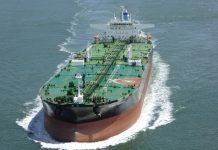
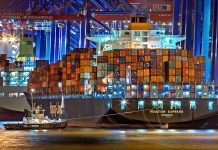
According to the OilPrice author, relief could come, of all places, from the United States. Washington is seeking to expand its oil and gas production. At the same time, more and more LNG tankers are being deployed on European routes. Independent LNG and shipping analyst Pratiksha Negi explains: “The growing share of transatlantic trade, combined with a rising number of vessels available at short notice, will put further pressure on freight rates.”
She expects that, in the fourth quarter of 2026, Europe will remain the most important additional market for American liquefied natural gas due to its low gas reserves.
According to her figures, around 55 new LNG vessels were delivered in the first seven months of 2026 alone. A further 40 to 45 are expected to be added by the end of the year. This improves transport capacity and could reduce freight costs. However, due to technical constraints, liquefied natural gas is always much more expensive than pipeline gas. At the same time, Europe – and Germany in particular – remains dependent on international energy prices and suppliers. The EU elites have replaced their former dependence on Russian pipeline gas with a dependence on much more expensive gas and less reliable suppliers.
The UK as a warning to the EU
The UK is also under pressure. ‘OilPrice.com’ reports that up to 163,000 jobs will be lost in the UK this year as a result of the economic consequences of the war with Iran, particularly in industrial regions such as South Wales and the Humber region. Chris O’Shea, CEO of the British energy group Centrica, stated back in August that the UK had “almost no gas in storage” for the coming winter.
The situation in the UK illustrates just how problematic low storage capacity combined with high dependence on imports can become. Should companies be unable to cover their energy costs this winter, there is a risk of production stoppages and job losses. Higher operating costs are also frequently passed on to consumers through rising product prices, which further fuels inflation.
Citizens foot the bill – responsibility remains in Brussels
The European energy crisis is primarily the doing of the European Commission, from the Green Deal right through to its self-destructive refusal – driven by moral hypocrisy and ideological reasons – to source affordable oil and gas from a supplier that has been reliable for decades. Added to this are the international market disruptions and the military escalation in the Middle East, which have placed an additional strain on Europe’s energy supply.
European decision-makers bear full political responsibility for the depth of the crisis in which EU countries find themselves, for, due to their ideological blindness, they have turned a deaf ear to the long-term economic costs of their strategy – costs that many had warned about.
German decision-makers, too, bore significant responsibility for this development in our country. With their short-sighted climate policy, dripping with hypocritical moralising, and their hatred of Russia – which banishes not only Russian gas but also Russian culture – they have driven the German cart deep into the mud. That alone is bad enough!
What is even worse is that I see no way – and I am not alone in this – of pulling the German cart out of the mire with the current political leadership, made up of intellectual low-flyers.