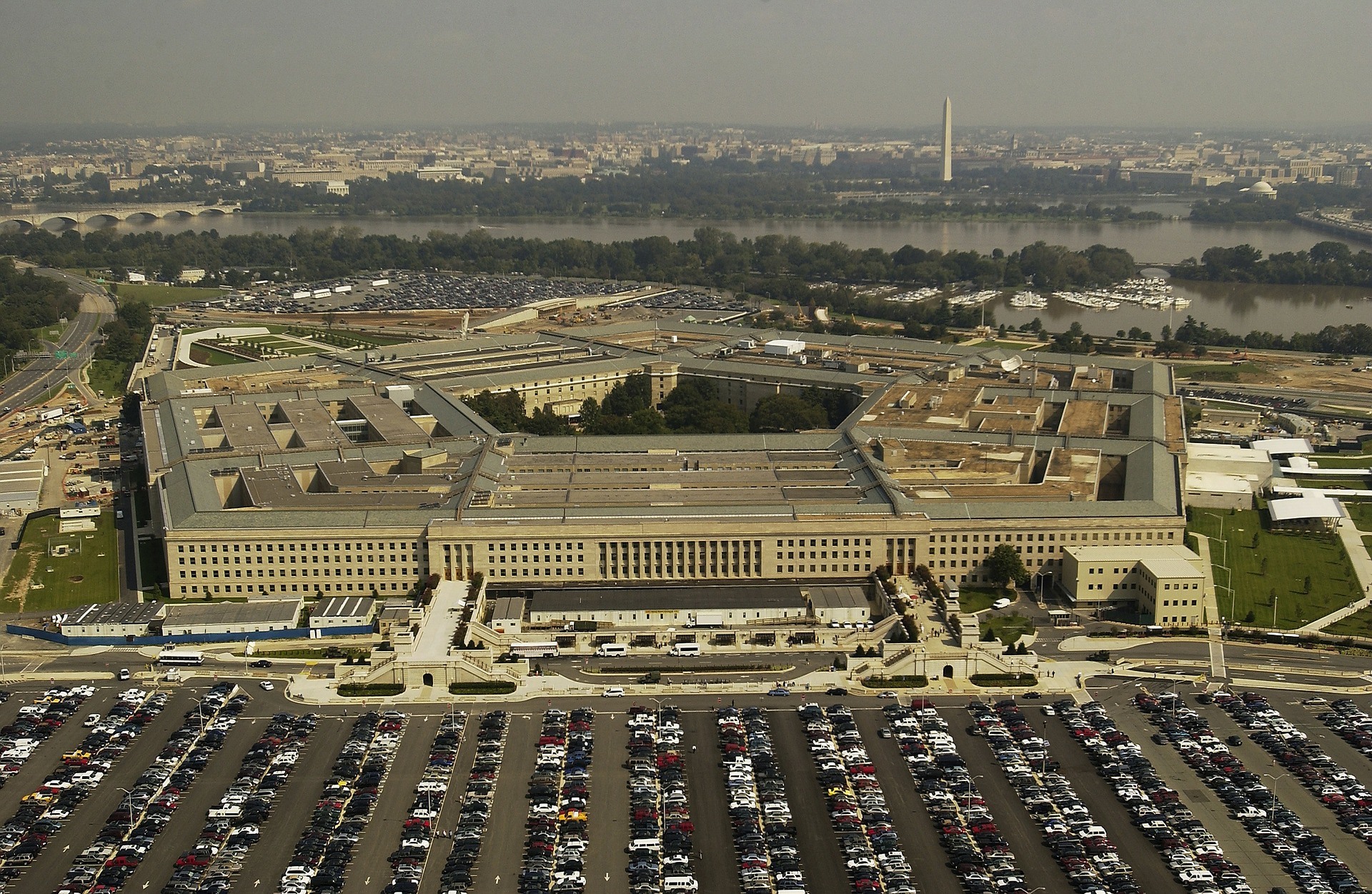
Berlin, FRG (Weltexpress). Why do American presidents who campaign as opponents of endless wars invariably become ‘war presidents’? Is it down to the wrong sort of personalities, poor advisers or influential hawks? The correct answer: the political system of the United States of America rewards military force.
The United States does not suffer from a lack of promises of peace. For decades, presidential candidates have campaigned on the promise of ending their predecessors’ military adventures. Barack Obama wanted to overcome the legacy of the Bush wars. Donald Trump promised to end wars rather than start new ones. Yet both launched new wars. The problem is therefore bigger than Trump, Obama or any single president. It lies in a political system that has made military force the readily available default option of American foreign policy.
Since the end of the Cold War, Washington has become accustomed to securing its global interests by military means, even when no existential American interests were at stake. The US has a huge professional army, a global network of bases and the logistical capability to project force into almost any region of the world at short notice.
Whilst for other states – with the exception of Israel – war is a last resort, to be used only after other avenues for reaching an agreement have been exhausted, in Washington diplomatic ultimatums, followed by war, have become political routine.
The US Congress has facilitated this development. Although the US Constitution grants it the authority to declare war, it has not formally declared war since the Second World War. No new comprehensive authorisation for the use of military force has been passed since 2002. Political responsibility has thus effectively shifted to the White House.
Added to this is a media culture that frequently stages the launch of military operations as a spectacle of resolve, whilst withdrawals are quickly portrayed as a sign of weakness. This creates a grotesque political asymmetry: bombing is supposedly a demonstration of leadership; negotiating and making concessions smacks of weakness and requires extensive justification.
America’s global system of alliances and military bases exacerbates this problem. In theory, these structures are intended to prevent wars. In reality, however, they generally draw Washington deeper into regional conflicts. Allies naturally pursue their own interests and attempt to harness American protection for their own ends. Israel is a striking example of this. Once US soldiers are stationed at bases in an allied country, the problem of ‘force protection’ – the protection of one’s own military bases and soldiers – arises. This, in turn, is usually a compelling argument for deploying even more US soldiers in foreign countries and, in the event of tension, for further military escalation.
The war on Iran illustrates this logic. US Secretary of State Rubio, for instance, publicly explained the reason for US involvement in the brutal, unprovoked Israeli war of aggression – which contravenes international law – as follows: American troops at bases in Arab countries in the Gulf region would almost certainly have been exposed to retaliatory strikes by Iran due to the Israeli attack on Iran that was to be firmly expected. For this reason, the Trump administration decided to participate from the outset in the crime against humanity that is the Zionist war of aggression. Using this very American ‘logic’, the existing deployment of US soldiers was used as an argument for why Washington itself had to participate militarily in the war.
In this way, the system of military bases can become a self-reinforcing mechanism: troops are stationed as a deterrent; their presence creates vulnerability; this vulnerability legitimises intervention; and the intervention, in turn, demands an additional military presence. It is a marvellous self-perpetuating cycle, a money-printing machine for all those in politics, the military, industry or consultancy who profit directly or indirectly from the war and/or build their careers on it.
Equally disastrous is Washington’s inability to accept limited political outcomes. Clearly defined, militarily achievable sub-goals are quickly transformed, in Washington’s daily political and media discourse, into more far-reaching demands for regime change and nation-building, or for a complete victory. Added to this is the fact that the American experience following the Cold War has fostered the illusion that the US’s overwhelming military superiority can automatically be translated into a lasting political order.
Iran provides yet another example. Prior to Operation ‘Epic Fury Failure’, Tehran had offered to halt domestic uranium enrichment, remove enriched uranium and allow inspectors from the International Atomic Energy Agency to return. Washington rejected this compromise and instead opted for a more comprehensive military victory.
One of the key prerequisites of this militarism is the astonishing shielding of the American population from its human consequences. A professional army concentrates the human costs on a relatively small section of society. Technologically advanced wars fought from a distance require fewer soldiers. At the same time, the financial costs can be deferred into the future through debt.
That is why, for many Americans, the war in Iran could only become visible as an experience of inflation. The war against a state with 93 million inhabitants, the destruction of military and civilian infrastructure, and the destabilisation of a key global trade route were reduced by politicians in everyday American life to the anonymity of higher prices.
America’s allies in the region, by contrast, are directly affected
In the Middle East, the immediate repercussions are felt most acutely by the Gulf states. They lie within the range of Iranian missiles and drones and bear a significant share of the regional risks of escalation. At the same time, a conflict over the Strait of Hormuz destabilises energy markets far beyond the region.
Europe pays the price in other ways. Every Patriot or other interceptor missile used in the Middle East is not simultaneously available for Europe’s air defence or for Ukraine. The NATO-affiliated Centre for Strategic and International Studies (CSIS) issued an explicit warning as early as March 2026 that European states are heavily dependent on American air defence systems and associated munitions, and that Operation ‘Epic Fury’ is placing an additional strain on already scarce stocks.
This dependence is by no means marginal. According to the Stockholm International Peace Research Institute (SIPRI), 58 per cent of arms imports by European NATO states between 2021 and 2025 came from the US. Washington remains particularly important when it comes to combat aircraft and long-range air defence. Europe has thus tied itself even more closely to the American defence industry, of all times, during a phase of increasing strategic uncertainty.
Asia, too, bears the opportunity costs of American war policy. On so-called social media, critical questions are increasingly being raised as to how Washington can still discuss the defence of Taiwan whilst its consumption of munitions in the Middle East undermines the material basis for this debate. This warning is supported by recent CSIS analyses, which conclude that the US would be inadequately prepared for a protracted war with China and that the campaign against Iran, in particular, has significantly reduced stocks of long-range weapons and air-defence missiles.
Even forces from Japan have been withdrawn to the Middle East. 2,500 marines and three warships, including the USS Tripoli, were redeployed from the region, which in turn led to Japan expressing concerns about the ‘US deterrence gap’.
This reveals the fundamental contradiction at the heart of American militarism. Washington demands that its allies place their trust in American security guarantees, whilst at the same time squandering, in self-imposed wars, the very resources on which those guarantees are based.
More money alone will not solve this problem. A military budget of 1.5 trillion dollars would divert investment from other sectors and could, in the long term, hamper innovation and growth. Further militarisation to repair the consequences of previous militarisation would therefore not be a strategy, but a circular argument.
Conclusion
America’s fatal attraction to war endangers more than just Americans. The US elites’ love of war also exports the risks of US wars to its allies. In the process, weapons and other resources intended for joint use are depleted, and Europe, the Middle East and Asia are forced to live with the consequences of decisions made in Washington over which they have, if at all, only limited influence.
A protective power that wears down its military reserves in a ceaseless succession of side wars may at some point be absent precisely where its allies actually need it. Analysts at the CSIS warn that American overstretch will then lead to insecurity in Europe, the Middle East and Asia.