Berlin, Germany (Weltexpress) – Proceeds from Venezuelan oil exports flow through accounts managed by the US Department of the Treasury. The colonial administration in Washington then reviews budget requests from Caracas, decides on the release of funds, and controls access to the country’s most important export commodity.
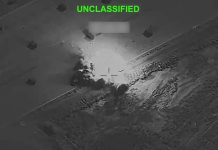
Following the military assault on Caracas on January 3, 2026—which resulted in dozens of deaths—the United States transformed Venezuela’s oil industry into a lucrative revenue stream for Washington. Venezuelan economist Professor Francisco Rodríguez, an associate of the US-based Center for Economic and Policy Research (CEPR), explained that the Trump administration billed Venezuela $4.7 billion—approximately 32 percent of the country’s oil exports for the current year—on the grounds that this was required to cover the costs of the US assault on Venezuela. These funds were deducted by the US before the payments for oil exports even reached Venezuelan state accounts.
This means that all payments for Venezuelan oil exports go directly to the Trump administration, where they are distributed among various recipients. During the current year, the majority of this revenue did not reach Venezuela, even though the country is currently facing the immense task of mitigating the social and economic consequences of devastating earthquakes.
In an interview circulated by outlets including Drop Site News, Luigi Pisella, a member of the Venezuelan Commission on Public Assets, outlined the figures for the first half of 2026. The country generated approximately $14.7 billion in gross oil revenue. However, only about $7 billion of that amount remained with the Venezuelan state. The remainder was consumed by debt repayments to Chevron, production and operating costs, and exchange-rate-related deductions under the terms of the US-managed oil agreement.
Pisella specifically cited a “US-imposed cost component” of approximately $4.7 billion covering the expenses of the US naval blockade against Venezuela in late 2025 and the subsequent military operation in Caracas. President Donald Trump himself reportedly stated that this expenditure was settled through the delivery of 40 to 60 million barrels of oil. After deducting this item, along with other costs and exchange rate discounts, the net amount accruing to the country came to around seven billion dollars.
Prof. Rodríguez highlights the scale of this figure through a historical comparison. German reparations following World War I—which went down in econo
ic history as a particularly heavy burden—amounted to roughly 13 percent of total German exports between 1924 and 1931. Washington, by contrast, now siphons off more than twice that percentage—specifically 32 percent—of total Venezuelan oil export revenues before the funds even reach Caracas. Rodríguez is a Senior Research Fellow at the CEPR and a professor and fellow at the University of Denver’s Korbel School of International Studies. A native of Venezuela, he is also the founder of Oil for Venezuela, a non-profit organization dedicated to finding solutions to Venezuela’s humanitarian crisis.
On June 24, 2026, two powerful earthquakes measuring 7.2 and 7.5 on the Richter scale struck northern Venezuela. Thousands of people died, hundreds of thousands were injured or left homeless, and infrastructure—particularly in La Guaira and Caracas—sustained massive damage. Estimates of the direct damage run into the tens of billions of dollars. Reconstruction requires vast resources, yet a significant portion of oil revenues remains under US control and administration. Following the criminal US operation “Absolute Resolve”—in which legitimate President Nicolás Maduro was abducted by US troops and taken out of the country—Delcy Rodríguez, by then regarded as a US collaborator, assumed the office of interim president.
Since then, the US has exercised extensive financial control. Oil export revenues flow through accounts monitored by the US Treasury Department. According to the *Financial Times*, more than $13 billion in Venezuelan oil sales passed through US-controlled structures by the end of July 2026. Verifiable transfers to Caracas were significantly lower; at times, transparency portals on the Venezuelan side showed only isolated transactions. As early as July, Rodríguez had questioned the whereabouts of the multi-billion-dollar discrepancy. Possible explanations include payments to joint-venture partners, the servicing of outstanding debts to multinational corporations as a priority, or withheld funds.
In this peculiar construct—a US protectorate lacking a formal colonial administration—Washington reviews budget requests from Caracas, decides on the release of funds, and controls access to the country’s most important export commodity. At the same time, production volumes are rising, and an increasing share of output is flowing to US refineries. US companies such as Chevron and Hunt Oil, along with service providers like SLB, are expanding their presence. Critics of this trend argue that the surrender of control over the country’s oil reserves—and the associated revenues—to the US was forced under military duress, effectively with a gun to the head, and violates the constitution.
However, the corrupt Rodríguez transitional government operates on the principle that “legal or illegal—it makes no damn difference,” publicly reveling in forecasts of ever-higher dollar revenues, as future investments could potentially pour hundreds of billions in tax revenue into the state coffers.
Discussions on this matter touch upon fundamental questions of national sovereignty. A country possessing the world’s largest proven oil reserves is once again generating higher export revenues; yet, according to Venezuelan and independent observers, a significant portion of these funds is being used to finance the very intervention that enabled this control in the first place. While earthquake victims await reconstruction and the Central Bank of Venezuela deploys foreign currency reserves to stabilize the exchange rate against the dollar, the precise allocation of these billions remains incompletely documented.
Prof. Rodríguez’s comparison to the reparations payments of the Weimar Republic targets precisely this point: the heavy siphoning off of export earnings during a period of critical need for reconstruction hampers both economic recovery and political autonomy. The coming months will reveal whether the announced investments and fund releases will actually strengthen the Venezuelan state budget to the extent suggested by gross revenues—or if the 32 percent levy will become a permanent feature of the new Venezuelan oil order.